

RVX USD Front Forks & Suspension: Why It Rides Like a Performance Bike
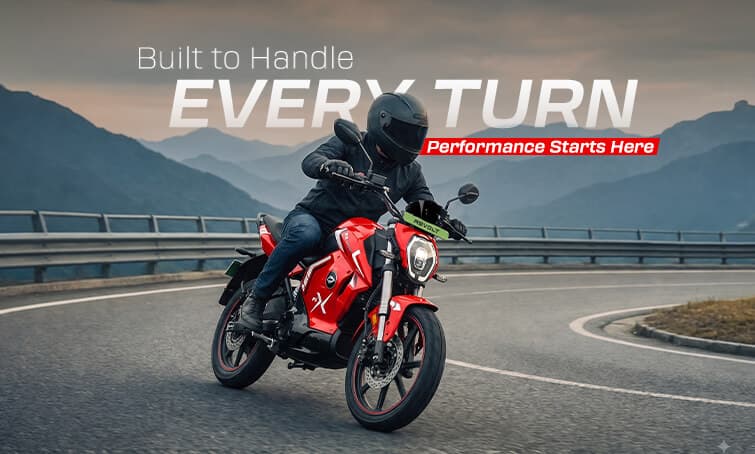
Suspension rarely makes it into casual conversations about buying a two-wheeler, yet it affects almost everything about how a bike actually feels once you are riding it. Comfort over bad roads, stability during hard braking, and confidence through a corner all trace back to how well the suspension is doing its job. Most riders spend far more time comparing motor output and battery range than they do thinking about suspension, largely because it is harder to compare on a spec sheet. On the RVX, Revolt has fitted components typically reserved for performance-focused bikes, and this article breaks down exactly what that means and why it matters for everyday riding. According to the RVX's official specification sheet, the front suspension uses an Upside Down fork, commonly referred to as a USD fork, while the rear uses a Monoshocker setup. This combination is a meaningful step up from the conventional telescopic forks and twin-shock arrangements found on most commuter-focused electric bikes in this price segment. Understanding RVX suspension starts with understanding why this hardware choice matters in the first place, rather than treating it as just another spec sheet entry. A conventional telescopic fork has the thicker fork tube mounted at the top, near the handlebar, with the thinner slider tube at the bottom, near the wheel axle. A USD fork flips this arrangement. The thicker, stiffer tube sits at the bottom near the axle, while the thinner tube sits higher up. This inverted design is engineered to improve front-end rigidity. Because the stiffer, larger-diameter tube is closer to the wheel, it is built to resist flex more effectively during hard braking and aggressive cornering, translating into more precise, predictable handling. This is exactly why USD forks are a common sight on performance bikes and increasingly on premium electric bikes, rather than on basic commuter models where cost is the primary design constraint. For a rider navigating Indian roads, where potholes and uneven surfaces are a daily reality, this stiffer front end also means the RVX can absorb impacts more consistently without the vague, slightly disconnected feeling that softer, less rigid forks sometimes produce. At the back, the RVX uses a single rear shock absorber, or monoshock, rather than the twin-shock setup found on many traditional two-wheelers. Because the load is managed through a single, centrally mounted shock rather than two units on either side of the wheel, engineers have more flexibility in tuning suspension travel and damping characteristics precisely. This generally results in more consistent handling, particularly when the bike is loaded with a passenger or additional weight. The monoshock setup also keeps the RVX's tail section visually cleaner, contributing to the bike's overall design language, though the primary reason for its inclusion is genuinely functional rather than purely cosmetic. Electric motorcycle handling conversations often focus heavily on motor output and battery range, while suspension quality gets comparatively little attention. This is a mistake, since suspension directly affects how safe and confident a rider feels in situations that happen every single day: sudden braking to avoid a pothole, leaning into a roundabout, or absorbing a speed breaker taken slightly too fast. Indian road conditions vary enormously between smooth city streets, aggressively cambered village roads, and stretches with irregular patching after monsoon repairs. The RVX's combination of USD front forks and a rear monoshock is specifically suited to handling this kind of variability better than a basic telescopic and twin-shock arrangement typically manages. Designed for more confident braking: the stiffer front end is built to reduce fork dive and flex under hard braking, keeping the front wheel more planted and predictable. Designed for better cornering feedback: reduced flex through the front forks lets steering input translate more directly into how the bike responds. Smoother handling of Indian road irregularities: the 190mm ground clearance, combined with this suspension setup, is designed to help the RVX handle speed breakers and potholes without excessive jolting through to the rider. Designed for more stable performance under load: the rear monoshock's engineered damping is intended to help maintain consistent handling whether you are riding solo or with a pillion. Most electric commuter bikes in India, particularly scooters and entry-level models, use basic telescopic forks up front and simple twin-shock absorbers at the rear. These setups are perfectly adequate for gentle city riding at moderate speeds, but they tend to show their limitations once speeds increase or road conditions deteriorate. The RVX's suspension hardware places it in a different category entirely, closer to what riders would expect from a performance-oriented petrol bike than a typical electric commuter option. Test ride over rough surfaces if possible, not just smooth showroom access roads. Try the bike solo and with a passenger, if you regularly ride with a pillion, since load distribution affects how the rear monoshock performs. Pay attention to braking feel, not just acceleration, during your test ride. Ask about suspension maintenance requirements, since USD forks and monoshocks may have different servicing needs compared to conventional setups. Compare handling directly against other bikes you are considering, ideally on the same day, so impressions do not fade between separate test rides.What Suspension Hardware Does the RVX Actually Use?
USD Forks Explained: Why the Design Matters
The Rear Monoshock: A Space-Efficient, Performance-Oriented Choice
Why This Matters for Electric Motorcycle Handling in India
How This Translates to Real Riding Experience
Comparing RVX Suspension to Typical Commuter Bikes
Buying Tips Around Suspension and Handling