

Petrol Price Hike in India: Is It Time to Buy an Electric Bike in 2026?
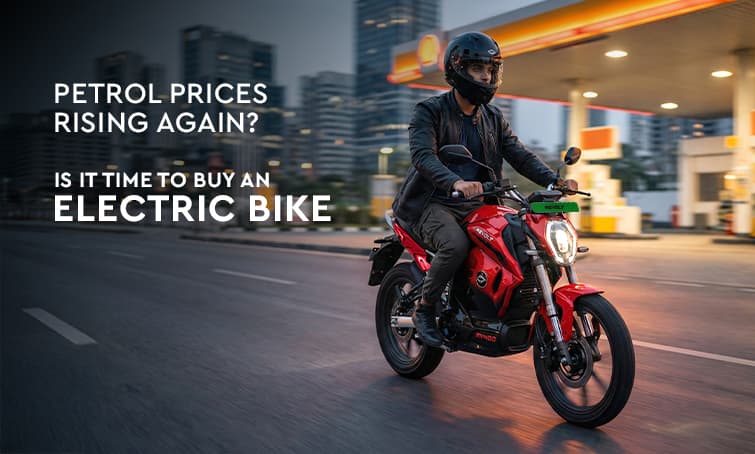
Rising fuel costs have become a major concern for daily commuters across India. With petrol prices increasing over time, many riders are now rethinking their transportation choices. This shift has led to a growing interest in buying an electric bike as a cost-effective alternative.
Today, more people are exploring whether it makes sense to buy an electric bike in 2026, especially when compared to traditional petrol bikes. Improvements in battery technology, charging infrastructure, and overall performance have made electric bikes a practical option for everyday use.
As a result, the demand for a new electric bike in India is increasing, particularly among riders looking to reduce their monthly commuting expenses.
Petrol Prices vs EV Ownership
One of the biggest reasons behind the rising popularity of electric bikes is the increasing cost of petrol. For riders who commute daily, fuel expenses can become a significant part of monthly spending. Even small changes in petrol prices can have a noticeable impact over time.
In comparison, owning an electric bike offers better cost control because electricity is generally cheaper than petrol. Charging an electric bike at home or work is more predictable in terms of cost, making it easier for riders to manage their expenses. This difference in daily running cost is one of the key factors driving the shift toward electric mobility.
Benefits of Electric Bikes
There are several reasons why more riders are choosing to buy an electric bike in India.
Lower Running Cost
Electric bikes run on electricity, which is significantly cheaper than petrol. This helps reduce daily commuting expenses.
Low Maintenance
Electric bikes have fewer moving parts compared to petrol bikes. There is no engine oil, fewer servicing requirements, and reduced wear and tear.
Smooth Riding Experience
Electric bikes provide smooth acceleration and do not require gear shifting, making them easier to ride in city traffic.
Convenient Charging
Many electric bikes come with removable batteries that can be charged using a standard power outlet at home or office.
Electric bikes such as the Revolt RV400, RV1, and RV BlazeX are designed to provide these practical benefits for everyday commuting.
Cost Comparison: EV vs Petrol
When comparing long-term costs, choosing an electric bike can be more economical than owning a petrol bike. The difference becomes clearer when we look at actual running cost calculations.
Cost Comparison Example
A typical electric bike like the Revolt RV400 uses a 3.24 kWh battery and delivers a range of up to 150 km per charge.
If electricity cost is approximately ₹6 per unit:
- Total electricity consumption = 3.24 units
- Cost per charge = 3.24 × ₹6 = ₹19–₹20
- Range = 150 km
- Cost per km = ₹20 ÷ 150 = ~₹0.13 per km
Petrol Bike Cost
For a petrol bike:
- Mileage = 50 km per litre
- Petrol price = ₹100 per litre
- Cost per km = ₹100 ÷ 50 = ₹2 per km
EV vs Petrol Cost Table
| Cost Factor | Electric Bike | Petrol Bike |
| Energy Source | Electricity | Petrol |
| Cost Per Unit | 6 Per Unit | 100 Per Litre |
| Cost Per KM | 0.13 Per KM | 2 Per Km |
| Maintenance | Low | High |
| Servicing Needs | Minimal | Regular |
Key Insight
This clearly shows that electric bikes are approximately 10–15 times more cost-efficient per kilometer compared to petrol bikes.
Additional Cost Benefits
Electric bikes also reduce long-term ownership costs because they do not require:
- Engine oil changes
- Complex engine servicing
- Frequent maintenance parts
Over time, these savings add up significantly. This is why many buyers researching the electric bike price in India are now considering EV bikes as a more economical option for daily commuting.
Conclusion
With petrol prices continuing to rise, many riders are looking for smarter and more affordable commuting solutions. Buying an electric bike in 2026 is becoming a practical decision for those who want to reduce daily expenses and adopt a more efficient mode of transport.
Ready to buy an electric bike in 2026? Book your bike now
With better battery performance, lower running costs, and improved features, electric bikes are becoming a strong alternative to petrol bikes.
For riders exploring a new electric bike in India, this shift towards electric mobility offers both financial and practical advantages in the long run.