

How Far Can the RVX Actually Go at Highway Speed? A Real-World Test
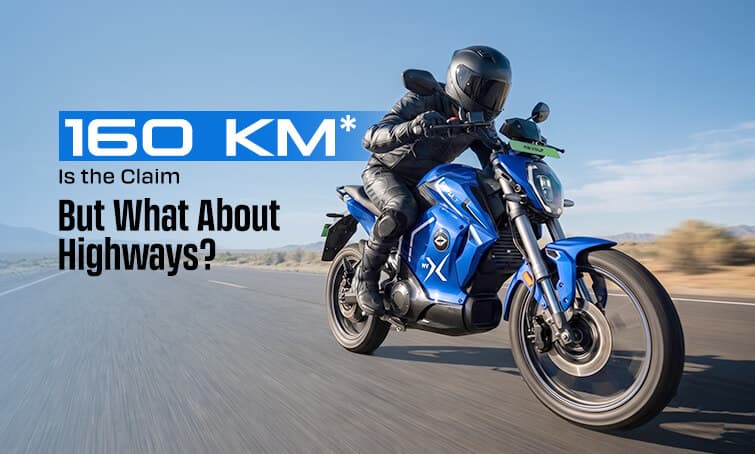
The RVX's official specification sheet lists a 160 km IDC range*, but almost every experienced EV rider knows that claimed figures and real-world results are two different things, especially once sustained highway speeds enter the picture.
This gap between claimed and real-world figures is not unique to Revolt, and it is not a hidden flaw specific to the RVX. It reflects how every electric two-wheeler in India is tested and rated, and understanding this properly helps set accurate expectations before you buy.
A quick note on what this article actually is: this guide looks at what riders can realistically expect from the RVX at highway speeds, based on general EV engineering principles and publicly available specifications, rather than presenting results from an independent, controlled road test. Revolt has not published a separate certified highway-specific range figure, so the estimates below are reasoned analysis, not measured test data.
Why Highway Range Differs From the Claimed IDC Figure
The IDC (Indian Driving Cycle) figure that appears on official specification sheets is measured under a standardised test protocol designed to represent a mix of riding conditions, not sustained high-speed travel. Every electric two-wheeler sold in India carries an IDC-rated figure that behaves the same way: it represents a controlled test scenario, not a guarantee of real-world performance in every riding condition.
At highway speeds, aerodynamic drag increases sharply, and this is genuinely one of the biggest factors affecting range on any electric vehicle. Drag does not increase in a straight line with speed; it increases roughly with the square of speed, which means the jump from 40 km/h to 80 km/h costs significantly more energy than the jump from 20 km/h to 40 km/h. This single factor explains most of the gap riders notice between claimed range and what they actually get on a sustained highway stretch.
What Affects RVX Real-World Range Beyond Speed
Rider weight and additional load: a heavier rider, or riding with a pillion, increases the energy required to maintain the same speed, which reduces overall range.
Riding mode selection: the RVX offers four riding modes, Eco, City, Sport and Boost, each tuned differently for power delivery. Riding predominantly in Sport or Boost mode will use noticeably more energy than riding in Eco or City mode.
Ambient temperature: battery performance is affected by temperature, with very hot or very cold conditions generally reducing efficiency.
Traffic conditions and stop-start riding: frequent stopping and starting allows the RVX's regenerative braking system to recover some energy, partially offsetting the inefficiency of stop-start riding.
Tyre pressure and maintenance: underinflated tyres increase rolling resistance, drawing more energy from the battery.
A Realistic Expectation for Highway Riding
Based on how electric vehicles generally behave at sustained higher speeds, riders should expect the RVX's real-world highway range to fall meaningfully below its 160 km claimed IDC figure* when ridden consistently in Sport or Boost mode at higher speeds. This pattern holds true across the electric two-wheeler segment broadly, not just for the RVX specifically.
Riders planning frequent highway use should treat the IDC figure as an upper-bound reference under ideal conditions, rather than a guaranteed distance for sustained higher-speed travel, and should plan charging stops accordingly on longer routes.
How Riding Mode Affects Highway Range
Eco mode prioritises efficiency, capping top speed at 50 km/h, well suited to conserving battery on longer stretches where maximum speed is not essential.
City mode offers a balance, capping speed at 65 km/h*, reasonable for mixed riding that includes some highway sections.
Sport mode allows up to 80 km/h, trading efficiency for stronger performance and quicker overtaking ability.
Boost mode unlocks the RVX's full 90 km/h top speed*, delivering maximum performance at the cost of the fastest battery depletion among the four modes.
For a rider planning a longer highway-inclusive trip, deliberately choosing City or Eco mode for extended stretches, and reserving Sport or Boost for overtaking manoeuvres, is a practical way to extend usable range without sacrificing safety or convenience.
Charging Planning for Longer Rides
Given the realistic gap between claimed and real-world highway range, planning charging stops becomes an important part of any longer trip on the RVX. The bike supports fast charging from 0-80% in around 80 minutes using the optional 27A charger, considerably quicker than the standard charging time of roughly 3 hours 30 minutes for the same 0-80% range using the standard charger.
For riders regularly covering highway-inclusive routes, identifying charging points along common routes in advance, and building in a fast-charging stop well before the battery runs low, is a sensible practical approach until more extensive public charging infrastructure develops further across highway corridors.
Setting Realistic Expectations Before You Buy
If highway riding is a significant part of your intended use for the RVX, it is worth having a clear, honest conversation with your dealer about the range you can realistically expect based on your typical riding style, rather than assuming the claimed IDC figure will translate directly into highway performance. This is not a criticism unique to the RVX; it applies to evaluating highway range for any electric two-wheeler before purchase.
For a deeper look at how each riding mode is tuned, see our breakdown of Boost Mode vs Sport Mode.
Buying Tips for Highway-Focused Riders
Ask your dealer directly about expected highway performance, based on their experience with customer feedback.
Plan your riding mode strategically on longer trips, using Eco or City mode for sustained cruising and reserving Sport or Boost for specific overtaking needs.
Identify charging points along your typical routes in advance, particularly if you regularly travel between cities.
Factor in rider weight and any regular pillion riding when estimating your own expected range.
Take a longer test ride if possible, rather than just a short showroom loop, to get a more realistic sense of range under your actual riding conditions.