

Why Every Major Bike Brand Is Going Electric in India
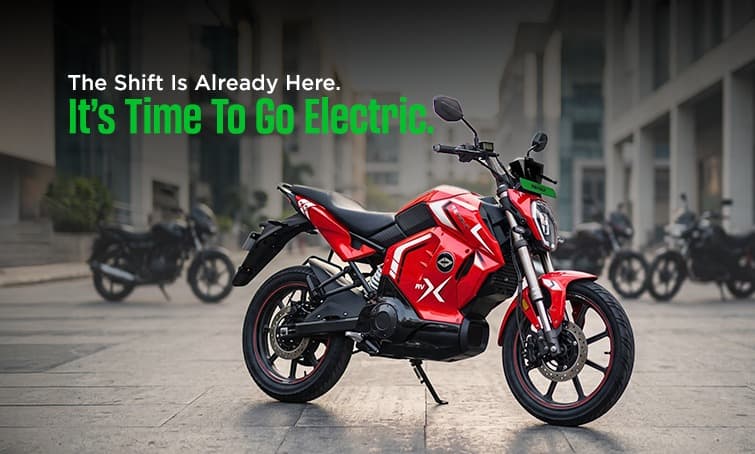
A few years ago, an electric motorcycle in India meant a handful of startups experimenting with a niche idea. That's no longer the case. Hero, TVS, Bajaj, Royal Enfield, and Ola now sit alongside dedicated EV manufacturers like Revolt, Ultraviolette, and Oben, and almost every one of them has launched or announced an electric motorcycle in the last two years. This isn't a side project for any of these brands anymore, it's a core part of their product roadmap, and understanding why helps explain where the electric bike market in India is actually headed next.
The Numbers Behind the Shift
Electric two-wheelers crossed a million units sold in the first seven months of 2026 alone, and penetration of EVs within total two-wheeler sales has climbed into the 8-11% range in recent months. That's still a minority of the market, but the growth rate is what's driving manufacturer decisions: petrol two-wheeler sales are largely flat, while electric sales are compounding year over year. No brand with long-term ambitions in India can afford to sit out a segment growing at that pace, and the numbers explain why so many manufacturers have shifted from watching the electric bike category to actively competing in it.
It's also worth noting that most of this early growth has come from electric scooters rather than motorcycles. That's changing too, motorcycle-style EVs are still a smaller slice of the category, but they're the fastest-growing part of it, which is exactly why brands that built their reputation on conventional motorcycles are now racing to launch electric equivalents rather than ceding the space entirely to scooters.
Government Push Is Doing Real Work
The PM E-DRIVE subsidy scheme has extended incentives for electric two-wheelers, and several state governments layer additional subsidies on top. Combined with lower running costs and rising fuel prices, the total cost of ownership case for an electric bike has become genuinely competitive with petrol, not just a green-conscience purchase. That changes the customer base from early adopters to mainstream commuters, and mainstream commuters are exactly who legacy brands are built to serve. A subsidy-driven price advantage is also something an established manufacturer with existing manufacturing scale can pass on more efficiently than a smaller startup working with thinner margins, which is another reason the bigger names are moving in now rather than later.
Legacy Brands Bring Something Startups Can't: Service Networks
This is where the competitive dynamic gets interesting. A newer, EV-only brand can move fast on design and software, but a buyer in a smaller city cares about whether there's a service center nearby if something goes wrong. Traditional manufacturers with decades of dealership infrastructure have a structural advantage there, which is why so many of them are entering now rather than waiting to see how the market shakes out. For a segment where after-sales trust still matters more than almost any single spec, that infrastructure head start is arguably a bigger competitive lever than raw performance numbers.
At the same time, dedicated EV manufacturers have an advantage of their own: their entire engineering culture, supply chain, and software stack were built around electric propulsion from day one, rather than adapted from a petrol platform. That tends to show up in smoother software experiences, more thoughtfully designed battery management, and connected features that feel native to the bike rather than bolted on.
Where Revolt Fits Into This Shift
Revolt has been building electric motorcycles since 2019, well before this wave of legacy-brand entries, and now runs a lineup spanning the entry-level Revolt RV1 through to the performance-focused Revolt RVX electric bike and the long-running Revolt RV400. That head start matters: while newer entrants are still building out first-generation software and service infrastructure, Revolt's is already several product cycles deep, with years of real-world usage data feeding back into every subsequent model.
If you're trying to make sense of where each current model fits, our electric bike range in India overviewbreaks down every model side by side, and the compare electric bikes tool lets you set specs against each other directly rather than flipping between separate pages.
What This Means If You're Buying Now
More brands competing for the same buyer is good news if you're shopping: more choice, faster feature iteration, and pricing pressure across the segment. The flip side is that not every new entrant will have the service network or software maturity to back up their launch specs. Worth weighing track record and after-sales presence alongside the numbers on a spec sheet, since a strong launch spec sheet backed by a thin service network can turn into a frustrating ownership experience a year or two down the line.
Where the Category Goes From Here
Expect the next couple of years to bring more direct head-to-head competition between legacy manufacturers and EV-first brands on price, range, and connected features, particularly in the ₹1-1.5 lakh bracket where most first-time electric motorcycle buyers are shopping. Buyers who wait for that competition to play out will likely see better pricing and more mature software, but buyers who need a bike now have a genuinely wider, more competitive set of options today than existed even two years ago.