

Fast Charging vs Regular Charging: Which is Better for Electric Bikes
With recent advancements in electric bikes, urban commuting and riding habits are starting to shift. One major point of discussion is the choice between fast charging and regular charging. Each type of electric bike charger comes with its own set of pros and cons, which can influence battery life, reliability, and overall user preference.
This detailed guide explores the unique aspects of both charging methods, helping riders decide which electric bike charger best fits their needs and lifestyle.
How Electric Bike Charging Actually Works
Before diving into the pros and cons of charging methods, it’s helpful to understand how most electric bikes are designed to charge and what makes some models more user-friendly.
Here’s what typically goes into charging an electric bike:
- Most electric bikes use high-energy-density lithium-ion batteries known for their longer lifespan.
- The charger must be plugged into a standard AC outlet first, then connected to the battery.
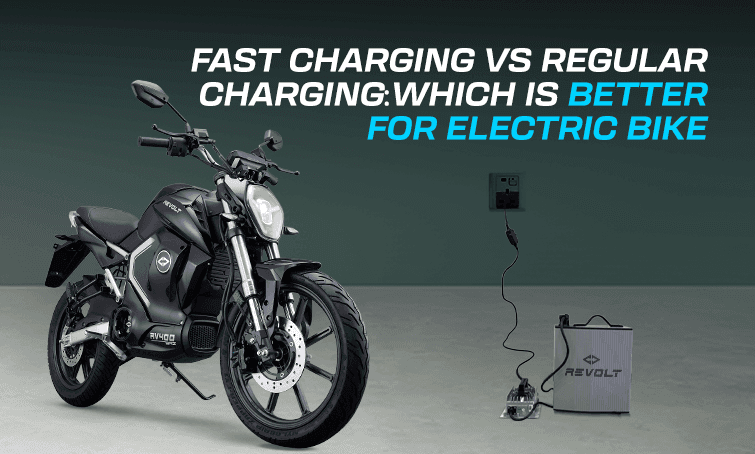
- Many newer models, like those from Revolt Motors, support dual charging—on-board (charging the entire bike directly) and portable (removing the battery to charge separately).
- The RV400 model includes a waterproof, removable battery rated IP67, making it ideal for apartment residents or those without fixed charging setups.
Electric bike charging time mainly depends on two factors: the battery’s capacity (measured in ampere-hours or watt-hours) and the charger’s output current (measured in amperes). A higher-capacity battery will naturally take longer to charge, while a charger with higher output current can speed up the charging process by delivering more power to the battery in less time.
Also Read: Owning an Electric Bike: What to Expect
Regular Charging: The Gentle Approach
Regular charging typically involves using the standard electric bike charger, which delivers a lower current output, usually between 2A and 4A. This method is built for steady, controlled energy transfer and is commonly included with most electric bikes.
The Benefits of Regular Charging:
- Longer Battery Life: It could almost be said that this is the most significant benefit. Regular charging generates less heat during the charging phase. Heat is one of the biggest factors that affects how quickly a lithium-ion battery wears out over time. Regular charging helps keep the battery cooler, especially in lower temperatures, which can protect its internal chemistry and extend its overall lifespan.
- Good Health: During the slow lift and discharge, the battery cells will have a chance to rebalance. This prevents the battery pack's cells from gaining excessive charge compared with others in the pack, resulting in better long-term performance.
- Reduced Risk of Overheat: Since less heat is generated, the possibility of an overheating-related problem developing into worse performance to safety issues is considerably reduced.
- More Economical: That is typically provided with your Electric bike charger is a regular charger.
Disadvantages of Regular Charging:
- Longer Charging Time: This is the most obvious drawback we could think of. Full charge with a regular charger may take 4 to 8 hours or even more, depending on the battery's capacity. For example, the RV400 from Revolt takes approximately 3 hours and 30 minutes to reach from 0% to 80% using the standard charger. While this pace works well for overnight or scheduled charging, it may not always suit those looking to top up quickly between rides.
- That’s where planning ahead can be helpful. Regular charging works best when you have time on your side, making it ideal for riders who prefer scheduled trips or overnight top-ups.
Also Read: Factors Affecting Your Electric Bike’s Range
Fast Charging: The Speed Demon
Electric bike fast chargers supply a higher current (usually from 4A to 8A or even more, such as 27A for Revolt's fast charger for the RV400). These are meant for those situations where time is of the essence.
Advantages of Fast Charging:
Significantly Reduced Charging Time: This is the main reason to opt for a fast charger for electric bike. Fast chargers would charge typically up to about 80% in about 1.5 to 3 hours. For instance, the 27A fast charger of the Revolt's RV400 has almost halved the charging times, taking only 80 minutes for 0 - 80%.
Convenience and Flexibility: For the fast movers, delivery riders, or any electric bike riders who do multiple rides throughout the same day, fast charging would be a need that can never be satisfied. It gives the liberty to power up during lunch or a quick stop lasting just 30 minutes before continuing with your plans.
More spontaneous trips: No more having to wait for hours just so that the batteries will be charged enough for that impromptu trip.
Disadvantages of Fast Charging:
- Faster Battery Degradation: Fast charging uses higher currents, which generate more heat and put extra stress on the battery’s internal chemistry. Over time, frequent use can lead to faster capacity loss, with an estimated 15 to 20 percent reduction after 500 charge cycles.
- Increased Heat: As mentioned earlier, increased heat can be a concern. While modern electric bike fast chargers often include advanced Battery Management Systems (BMS) for thermal control, repeated exposure to high temperatures may still affect battery lifespan over time.
- Higher Initial Cost: Usually, fast chargers tend to cost more than the average charger.
- Compatibility Issues: It is necessary to use a fast charger for an electric bike that fits and has been certified for your battery. An incompatible fast charger might rupture your battery, cause overheating, and even potentially torch it.
Finding the Right Charging Fit for Your Needs
Choosing between fast charging and regular charging depends on your riding habits, personal priorities, and what your electric bike charger supports.
Go for Regular Charging When:
- Maximizing Battery Life is the Preferred Option: If your objective is to make the battery of the electric bike last as long as possible, then using a regular charger will be the best approach.
- There is Plenty of Time to Charge: Charging during the afternoon might take a few hours, but it’s not a problem if you usually charge your electric bike overnight or have at least four hours of free time. This makes regular charging a convenient option for planned or end-of-day routines.
- Mostly The E-Bike is Used for Recreational Purposes: If you mostly use your e-bike for short commutes and don’t need quick turnarounds, regular charging works just fine.
Consider Fast Charging If:
Time is of the essence: You may be a daily commuter, student, office goer, or someone with tight schedules around rides.
You Need Flexibility: Charging your battery is often an at-the-moment decision.
Your E-Bike and Battery Are Set Up to Fast Charge: Make sure that the bike's battery and its BMS can handle higher currents associated with an electric bike fast charger. Trusted brands like Revolt Motors offer bikes with built-in fast charging and reliable battery systems.
Also Read: Best Battery Technologies Used in Electric Bikes
Charging Infrastructure and Battery Warranty: What to Keep in Mind
While most riders charge their electric bikes at home, public charging stations are becoming more common in urban areas, offering added convenience for those on the go. However, it's important to check if your e-bike is compatible with public chargers.
Also, your charging habits can affect battery warranty coverage. Frequent fast charging may impact long-term battery performance, and some warranties may include conditions related to charging frequency or methods. It's a good idea to review your manufacturer’s battery policy to avoid any surprises.
Charging Your Electric Bike: What to Do and What Not to Do
Listed below are some tips to help extend the life of your electric bike battery, whether you charge it more often with a fast charger or mostly use a regular charger:
- Use Only Recommended Chargers: Always use the charger that came with your electric bike or one recommended by the manufacturer to ensure safety and compatibility.
- Avoid Extremes in Temperature: This means that your battery should be charged in a cool, shaded spot. The fourth, with great heat or extreme cold, will affect the charging efficiency as well as the health of the battery.
- Avoid Over-Discharging: Try not to let the battery fully drain. It's best to keep lithium-ion batteries between 20% and 80% for longer life.
- Never Always Charge Full: Occasionally one can do a full charge; however, if a full charge regularly is fast charge to 100%, it can be detrimental to battery life. For everyday use, consider capping charge percentage at 80.
- Let Battery Cool Down: Let your battery cool after being run hard for long times before plugging it in to charge.
- Storing Correctly: Keep the battery between 50-60-percent charge while storing for a longer period, preferably under dry and cooler conditions.
Also Read: Best Electric Bike with Removable Batteries
Conclusion
Both regular and fast charging have their place in the electric bike experience. Regular charging puts less stress on the battery, helping extend its life, while fast charging gives you the flexibility to power up quickly and get back on the road. Most riders end up using a mix of both, charging overnight with a regular charger and using a fast charger for quick top-ups during busy days.
Revolt’s RV400 makes this balance even easier with its removable, IP67-rated waterproof battery and fast-charging support that powers up to 80% in just 80 minutes. It’s designed for daily convenience, whether you're at home, at work, or on the move.
Ready to experience it for yourself? Book a test ride today and explore the smarter way to ride!