

Revolt RV BlazeX vs RV400: Which Electric Motorcycle Should You Buy?
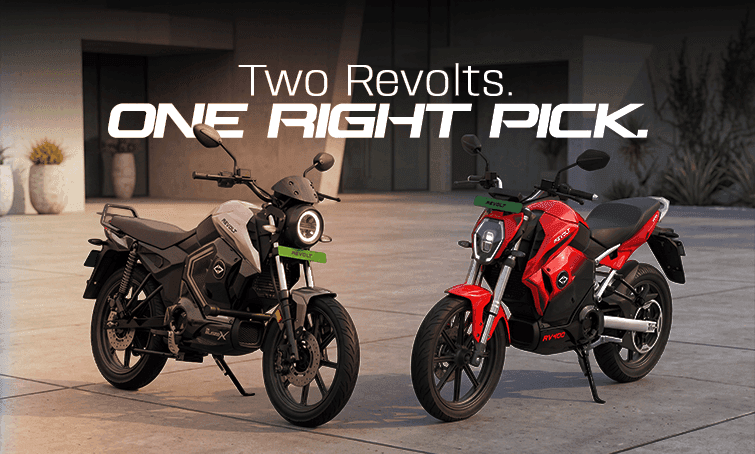
If you are shopping for an electric motorcycle from Revolt, two names come up again and again: the Revolt RV400 and the newer Revolt RV BlazeX. On paper they look almost identical. Both use a 4.1 kW mid-drive motor, both carry a 3.24 kWh removable battery, and both claim 150 km* of range. So why do two such similar bikes exist, and which one belongs in your garage?
This guide compares the Revolt RV BlazeX vs RV400 on the things that really change your daily ride: weight, payload, ground clearance, drivetrain, suspension, starting method and features. By the end you will know which bike fits your commute, your load and your riding style.
Revolt RV BlazeX vs RV400 at a Glance
*Claimed figures under test conditions. Real-world results depend on rider weight, load, speed, traffic and road conditions. Warranty terms apply. Always check the latest details on the BlazeX page and the RV400 page before you buy.
What the Two Bikes Share
Before we look at the differences, it helps to know what you get either way. The heart of both motorcycles is the same: a 4.1 kW mid-drive motor producing 45 Nm of torque. That is why the claimed top speed (85 km/h*) and the claimed range (150 km* IDC) match. Both run a 3.24 kWh removable battery with an IP67 rating, which means you can pull it out, carry it indoors and charge it from an ordinary 3-pin socket. No dedicated charging point near your parking spot is needed.
Charging time is also identical: about 3 hours 30 minutes for 0 to 80% on a normal charger, and about 80 minutes* with fast charging. Both bikes also use a Combined Braking System with disc brakes at the front and rear, so you stay in control even if you only squeeze one lever. If you want to dig into how the RV400 behaves in daily use, our Revolt RV400 review covers it in depth.
Weight and Handling: BlazeX Is the Lighter Bike
The first real difference you will feel is weight. The RV BlazeX has a kerb weight of 105 kg, while the RV400 weighs 115 kg. A 10 kg gap does not sound like much, but it shows up when you are pushing the bike out of a tight parking spot, manoeuvring in traffic or walking it up a ramp. If you are a newer rider or you share the bike with family members of different heights and builds, the lighter BlazeX is easier to live with.
The BlazeX also sits slightly lower. Its seat height is in the region of 790 mm depending on the source, compared with 815 mm on the RV400. Shorter riders usually feel more confident being able to put a foot down comfortably at traffic lights. Taller riders may prefer the RV400's higher seat and more upright stance.
Payload: Where the BlazeX Clearly Wins
Here is the biggest practical difference. The RV BlazeX is rated for a payload of 250 kg, while the RV400 is rated for 150 kg. Payload means the combined weight of rider, pillion and anything you carry. If you regularly ride with a pillion, carry a work bag, or load up for weekend errands, the BlazeX gives you far more headroom.
It also comes with a front storage box and an underseat charger box, which makes everyday carrying simpler. Keep in mind that range and performance always drop when you carry more weight, so the claimed 150 km* is best treated as a ceiling rather than a guarantee. Our guide to BlazeX real-world range and top speed shows what to expect on the road.
Ground Clearance and Road Comfort: RV400 Has the Edge
If your commute includes broken roads, big speed breakers or flooded patches, ground clearance matters. The RV400 offers 200 mm, while the BlazeX offers 180 mm. The RV400 also uses a USD front fork and a rear monoshock, while the BlazeX uses a telescopic front fork with twin rear shocks. The RV400's setup is the sportier arrangement, and its extra clearance helps on rough surfaces.
The BlazeX's setup is built around comfort and load-carrying. With twin shocks and a long seat, it is designed to stay stable when you are carrying a pillion or a heavier load. Neither is better in every situation. It comes down to the roads you ride and what you carry.
Drivetrain: Chain vs Belt
The BlazeX uses a chain drive with a 4:1 ratio, while the RV400 uses a belt drive, also 4:1. A belt tends to be quieter and needs less lubrication, while a chain is a familiar, easy-to-service component that most mechanics already understand. Both are designed to be low-maintenance, and neither will be a deciding factor for most riders. Either way, follow the service guidance in your owner's manual.
Starting the Bike and Everyday Features
The RV400 starts with a push button, while the BlazeX uses a combination lock and a manual key. Some riders love the simplicity of a key, while others prefer the modern feel of a button. Both bikes pair with the MyRevolt app, which lets you check battery status, view ride data, use geo-fencing and locate your bike. You can learn every feature in our MyRevolt app complete guide.
Both bikes have a 6-inch LCD display, a reverse mode that makes parking easier, and inbuilt GPS. The RV400 adds Eco, Normal and Sport riding modes and regenerative braking, which you can read about in our guide toregenerative braking in electric bikes.
Charging and Running Cost: A Tie
Because the battery, charging time and claimed range match, daily running costs are almost the same for both bikes. At an average of 25 km a day, most riders will plug in once every five to six days. Revolt says its bikes can save up to ₹3,000 a month* compared with petrol, depending on how much you ride and local fuel and electricity costs. You can test your own numbers with the Electric Motorcycle Savings Calculator. For charging tips, see our BlazeX charging guide and the general electric bike charging guide.
Which One Should You Buy?
Choose the Revolt RV BlazeX if:
You often ride with a pillion or carry loads and want the 250 kg payload.
You want a lighter, lower bike that is easier to handle in traffic and tight spaces.
You prefer a comfort-first setup with twin rear shocks and a long seat.
You like the idea of a simple chain drive and a keyed ignition.
Choose the Revolt RV400 if:
You want the higher 200 mm ground clearance for rougher roads.
You prefer a sportier USD fork and monoshock setup.
You like push-button starting and a belt drive.
FAQs