

Understand the Latest RTO Rules in India for Electric Bikes
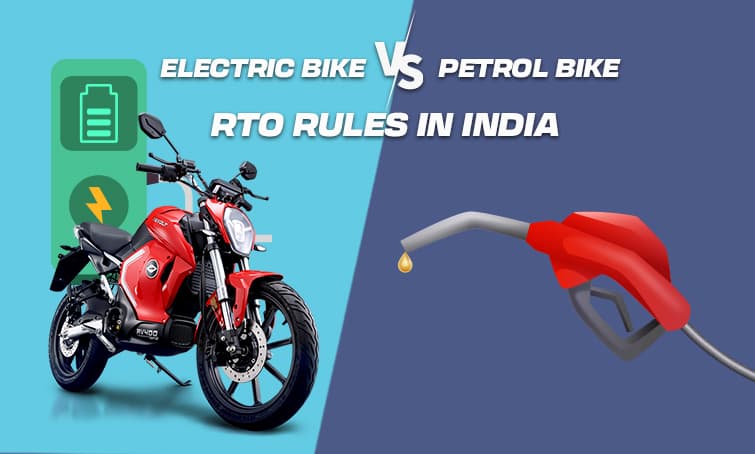
Electric bikes are rapidly gaining popularity across India due to rising fuel costs, urban congestion, and increasing environmental awareness. Riders need to understand the RTO rules for bike ownership to ensure compliance and avoid fines.
Electric and petrol bikes follow different regulations for registration, licensing, insurance, and taxation. Knowing these differences helps riders make informed choices, whether switching to an EV or continuing with a petrol bike.
Here’s a detailed look at the key differences in RTO rules for electric and petrol bikes that every bike owner should know.
Key Differences Between Electric and Petrol Bikes
1. Registration Requirements
Electric Bikes
High-speed electric bikes with a top speed above 25 km/h and motor capacity over 250W require mandatory registration. Required documents include Form 20, proof of identity, address proof, purchase invoice, and insurance. These bikes also carry green number plates with white letters, distinguishing them from conventional petrol bikes.
For example, the Revolt RV400 and RV1+ are classified as high-speed EVs, so riders must complete registration under RTO rules for electric bike ownership in India. Registration allows riders to claim subsidies and state-level incentives, reducing the effective cost.
Petrol Bikes
All petrol bikes require registration regardless of engine size. Required documents include Form 20, proof of identity, address proof, purchase invoice, insurance, and a Pollution Under Control (PUC) certificate. Petrol bikes use standard white number plates with black letters.
Compliance with registration rules ensures legal ownership and smooth resale in the future. Models like Apache RTR 200 4V or Yamaha FZ25 require the same formalities, highlighting the uniformity of petrol bike registration compared to EVs.
2. Driving License Requirements
Electric Bikes
High-speed electric bikes such as RV Blaze X and RV400 BRZ need a valid two-wheeler license. Low-speed electric bikes with a top speed under 25 km/h and motor capacity under 250W do not require a license in most states.
This distinction allows first-time riders to use low-speed EVs for short city commutes legally without additional licensing. Understanding these rules ensures compliance with RTO rules for electric vehicles in India.
Petrol Bikes
A valid driving license is mandatory for all petrol bikes, irrespective of engine displacement. Two-wheeler licenses (LMV category) cover most bikes, ensuring that riders meet legal standards for road safety.
3. Insurance Obligations
Electric Bikes
High-speed EVs must have mandatory insurance covering vehicle damage and third-party liability. Low-speed electric bikes are usually exempt from insurance requirements. EV-specific insurance often covers battery damage or replacement, a feature not included in petrol bike policies.
The Revolt RV1 and RV1+ benefit from such insurance coverage, safeguarding both the battery and the vehicle against unforeseen accidents. This aligns with current RTO rules for bike insurance compliance.
Petrol Bikes
Insurance is compulsory for all petrol bikes. Policies generally cover third-party liability and optional comprehensive coverage for damage, theft, or natural disasters. Compliance avoids legal penalties and ensures financial protection.
4. Pollution Control and Compliance
Electric Bikes
Electric bikes do not require a PUC certificate since they produce zero emissions. However, they must comply with battery safety and environmental standards. Compliance with these regulations prevents potential hazards and supports environmental sustainability.
High-capacity EVs such as RV400 BRZ or RV Blaze X adhere to these standards, ensuring safe battery usage and disposal. Battery certifications are checked during registration to maintain legal compliance.
Petrol Bikes
Petrol bikes must have a valid PUC certificate and meet Bharat Stage VI (BS-VI) emission norms. Regular checks prevent over-pollution and avoid fines. Compliance demonstrates responsible ownership and adherence to environmental laws.
5. Road Tax and Subsidies
Electric Bikes
Many states offer road tax exemptions and subsidies for electric bikes. EV buyers can also claim benefits under schemes like FAME II, reducing upfront and recurring costs.
For example, the RV1+ benefits from central and state incentives, lowering registration and road tax expenses. These provisions encourage adoption of electric vehicles while keeping costs manageable.
Petrol Bikes
Road tax for petrol bikes is calculated based on engine capacity, typically ranging from 4% to 15% of the ex-showroom price, depending on the state. No government subsidies or incentives are available for conventional petrol bikes, making ownership comparatively costlier over time.
6. Number Plate Regulations
Electric Bikes
Electric bikes carry green number plates with white letters to signify zero-emission vehicles. High-Security Number Plates (HSNP) are mandatory for all registered vehicles, ensuring traceability and preventing tampering.
High-speed models like RV400 and RV Blaze X follow HSNP standards similar to petrol bikes, combining legal compliance with easy identification on roads.
Petrol Bikes
Petrol bikes use standard white number plates with black letters. HSNP is also mandatory, aligning with government mandates for security and registration integrity.
7. Ownership Transfer and Resale
Electric Bikes
Ownership transfer of electric bikes involves standard RTO procedures and may include battery warranty transfer. Battery warranty ensures the new owner can avail of servicing and replacements if needed.
For instance, selling an RV400 BRZ requires submitting ownership forms, updated insurance, and battery transfer documentation. These additional steps differentiate EV resale from petrol bikes while ensuring compliance with RTO rules for bike owners.
Petrol Bikes
Petrol bike resale involves standard RTO transfer processes with no battery considerations. Submitting ownership forms, updated insurance, and PUC certificates completes the transfer.
8. Penalties and Violations
Electric Bikes
Violations for electric bikes include non-registration of high-speed models, missing insurance, and incorrect number plates. Low-speed EVs ridden without registration may also incur fines.
Owners of RV1 or RV1+ must adhere to speed limits, registration, and insurance requirements to avoid penalties under RTO rules for electric bike ownership.
Petrol Bikes
Petrol bike penalties arise from expired PUC certificates, missing insurance, and emission norm violations. Traffic violations also attract fines, emphasising the need for timely compliance.
To make it easier to understand the differences, here’s a quick comparison of RTO rules for bike and petrol bikes in India.
Key Takeaways
- Registration, license, insurance, and number plate rules differ between petrol and electric bikes.
- High-speed EVs like RV400 BRZ and RV Blaze X follow similar formalities as petrol bikes.
- EVs benefit from road tax exemptions, FAME II incentives, and battery-specific insurance coverage.
- Compliance ensures legal ownership, resale, and smooth road usage.
- Staying updated on RTO new rules for bike registration avoids penalties and secures ownership benefits.
Riders planning a switch to electric bikes should follow the RTO rules for bike ownership carefully. Keeping documents, insurance, and battery certifications updated ensures a hassle-free and legal riding experience across India.
Experience the future of commuting with Revolt Motors. Book a test ride today and discover how electric bikes make your daily ride smarter, quieter, and more cost-efficient.