

RVX Battery Life vs Replacement Cost: What You Need to Know Before Buying
Battery life is the single question that stops more people from buying an electric bike than any other. It's a fair concern, the battery is the most expensive component in any EV, and unlike a petrol tank, it degrades gradually over years of use rather than simply running empty and full. Here's a clear, honest look at what actually affects RVX battery life, and what you should know about costs down the line, written specifically to address the concern directly rather than glossing over it with vague reassurance.
How EV Batteries Actually Degrade
Unlike a phone battery that might degrade noticeably within a year or two of heavy daily charging, EV batteries, including the RVX's, use more robust cell chemistry and battery management systems specifically engineered for years of daily use. Degradation happens gradually, typically measured in percentage of original capacity retained over thousands of charge cycles, not in sudden performance cliffs. This gradual pattern means most owners experience a very slow, barely noticeable decline in range over years, rather than any dramatic single moment where performance drops off.
What the RVX's Battery Warranty Tells You
The RVX's battery is covered for 8 years or 80,000 km, whichever comes first, and this warranty term itself is a strong signal of expected battery longevity. Manufacturers don't offer 8-year coverage on a component they expect to fail early, the warranty period reflects genuine confidence in the battery's expected lifespan under normal use. We've covered the full warranty terms in more detail separately, including what's covered and what isn't.
What Actually Affects Battery Lifespan
A handful of real-world factors influence how well any EV battery holds up over years of use:
Charging habits: consistently charging to 100% and running down to empty repeatedly tends to stress battery cells more than partial, frequent charging
Extreme temperatures: very hot or very cold conditions can affect both short-term performance and long-term degradation, which is why Revolt's battery pack carries an IP67 rating partly to help manage environmental exposure
Charging speed usage: relying heavily on fast charging for every single charge, rather than mixing in regular charging, can contribute to marginally faster degradation over very long timeframes, similar to patterns seen across the EV industry generally
Storage conditions: leaving a vehicle unused for extended periods at very low or very high charge states isn't ideal for any lithium-based battery
None of these factors alone will dramatically shorten battery life if you're reasonably attentive, they matter most in combination, and mostly over very long timeframes measured in years rather than weeks or months.
Understanding Battery Chemistry: Why It Matters
The RVX uses NMC, Nickel Manganese Cobalt, battery chemistry, one of several types of batteries used in electric vehicles today, each with different trade-offs around energy density, thermal stability, and cost. Understanding which chemistry your bike uses helps set realistic expectations, NMC cells are widely used across the EV industry specifically because they offer a strong balance of range and performance, though like all lithium-based chemistries, they benefit from sensible charging habits over the vehicle's lifetime.
Replacement Cost: What Happens After Warranty
If a battery pack does need replacement after the warranty period ends, whether from age-related degradation or an isolated defect, this is a genuine cost worth planning for, similar to how a petrol bike owner budgets for an eventual major engine service. Exact replacement pricing depends on battery specifications and prevailing costs at the time, and is best confirmed directly with an authorized Revolt service center rather than relying on general estimates that can quickly become outdated as battery technology and pricing evolve.
Why Removable Batteries Are a Practical Advantage Here
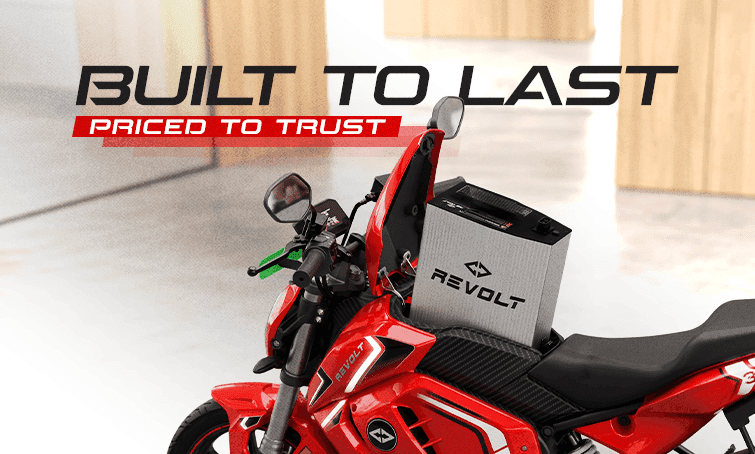
The RVX's battery is removable, not fixed into the frame, a meaningfully practical feature both for daily charging flexibility and for the eventual service or replacement process, since a removable pack is generally simpler to inspect, service, or swap than one permanently integrated into the vehicle's structure. This design choice also means that if a replacement is ever needed, it doesn't necessarily require the same level of disassembly that a fixed, frame-integrated battery would demand.
Realistic Expectations, Not Marketing Promises
It's worth being straightforward here: no EV battery lasts forever at 100% original capacity, just as no petrol engine runs at day-one performance after a decade of use. What matters is whether the degradation curve is gradual, predictable, and covered by a warranty term that reflects genuine manufacturer confidence, which is exactly the case with the RVX's 8-year, 80,000 km coverage. Buyers who go in with this realistic framing, rather than expecting indefinite, unchanging performance, tend to be far more satisfied owners over the long run.
Simple Habits That Support Long Battery Life
None of the following require any special effort, but building them into your normal routine can meaningfully support your battery's long-term health. Where practical, avoid routinely charging to 100% and running down to near-zero on a daily basis, favouring a more moderate charging pattern when your schedule allows it. Try to avoid leaving the bike parked in direct, intense heat for extended periods when better shaded parking is available. Mix regular charging with fast charging rather than relying exclusively on one method. None of these habits require sacrificing convenience in any meaningful way, they're simply small adjustments that compound favourably over years of ownership.
Comparing Battery Life Claims Across Brands
When researching electric bikes generally, it's worth being cautious of battery life claims that aren't backed by a clearly stated warranty term. A vague claim like "long-lasting battery" without a specific years-and-kilometres commitment tells you very little, whereas a defined 8-year, 80,000 km warranty gives you something concrete to hold the manufacturer accountable to. This is one of the clearest, most objective ways to compare battery confidence across different electric bike options rather than relying on marketing language alone.
Comparing This to How You Already Think About Batteries
Most people already have an intuitive sense of battery degradation from years of owning smartphones and laptops, where noticeable slowdown after a couple of years of heavy use is common and generally accepted as normal. EV batteries, including the RVX's, are engineered to a considerably higher standard specifically because the stakes are higher and the expected lifespan is measured in years of vehicle ownership rather than a typical phone upgrade cycle. That difference in engineering standard is part of what the 8-year warranty term is actually communicating.
Putting Battery Anxiety in Perspective
It's worth acknowledging that battery anxiety is often disproportionate to actual risk once a genuinely strong warranty term is in place. Most owners will sell or upgrade their bike well within the 8-year, 80,000 km coverage window, meaning the worst-case scenario, a costly out-of-warranty replacement, simply never becomes relevant for the majority of buyers. Understanding this timeline can go a long way toward addressing what's often the single biggest hesitation first-time EV buyers have.
Want to understand battery care in more depth before you buy? Book a test ride and ask your dealership to walk you through real-world battery maintenance practices