

5 Electric Motorcycle Myths, Debunked
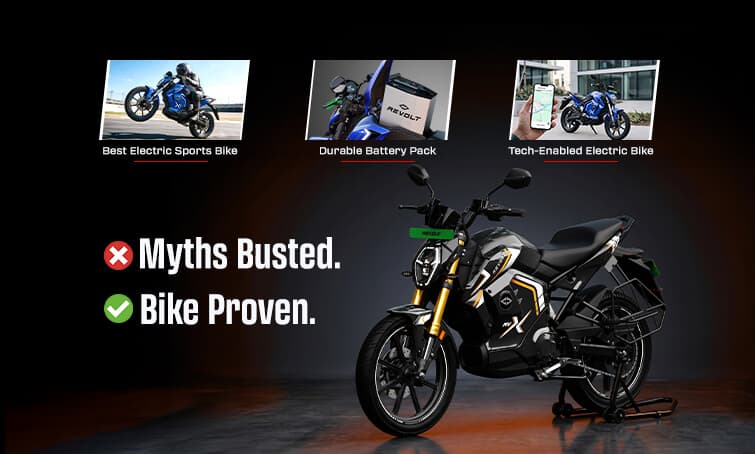
Electric motorcycles are common enough in India now that most of the old objections don't hold up the way they did a few years ago. A handful of myths keep circulating anyway, often based on outdated information or early-generation products. Here's a straight look at five of the most persistent electric motorcycle myths, checked against how the category actually works today, and why each one keeps coming up in conversation despite the facts having moved on. Range anxiety made sense when public charging infrastructure was sparse and battery capacities were smaller. Today, most electric motorcycles cover typical daily commuting distances comfortably on a single charge, and home charging overnight means you start most days at full capacity anyway. Our electric bike range guide breaks down what actually affects real-world range if you want to plan around your specific commute, rather than relying on the worst-case scenarios that fed this myth in the first place. It's also worth noting that most daily commutes in Indian cities fall well within the comfortable range of a modern electric motorcycle, and the anxiety usually stems from imagining occasional long trips rather than everyday reality. Planning ahead for the rare longer ride, rather than dismissing electric bikes outright over that one scenario, is a more useful way to think about it. This one's simply outdated. Electric two-wheelers require the same mandatory third-party insurance as petrol vehicles under Indian law, and comprehensive coverage is widely available from every major insurer. Our guide on electric bike insurance in India covers what's actually required versus optional, and how premiums are calculated for electric models specifically. Registration, licensing, and RTO requirements for electric motorcycles are well established at this point, and in several respects simpler than petrol vehicle registration, no pollution certificate requirement, for instance. Our breakdown of RTO rules in India for electric bikes lays out the current requirements state by state, so there's no ambiguity by the time you're standing at the RTO counter. Electric motors deliver peak torque instantly, which is actually an advantage over petrol engines in off-the-line acceleration. The Revolt RVX performance electric bike is built specifically around this characteristic, with quick acceleration that comes from the fundamental difference in how electric motors deliver power, not from cutting corners elsewhere. In practice, many riders find electric motorcycles feel quicker off the line than similarly priced petrol bikes, even when the headline top speed figures look comparable on paper. This one's just behind the times. Battery chemistry, thermal management, and battery management system design have all advanced significantly in the last few years, partly in direct response to the 2022 safety incidents that prompted tighter AIS-156 regulation. Our guide to electric bike battery technology explained covers what's changed and why it matters for both safety and range, and it's a genuinely different picture from the battery technology that shaped these myths in the first place. This one overlaps with the range myth but deserves separate mention because it shapes how people categorize electric motorcycles entirely, as city-only appliances rather than genuine motorcycles. Models built with sustained-performance tuning and larger battery packs handle highway stretches and longer rides comfortably, provided you plan charging stops sensibly. Our look at electric bike performance metrics goes into how to evaluate a specific model's suitability for longer rides beyond just its city-commute credentials. The most reliable way to check whether a piece of received wisdom about electric motorcycles still holds is to trace it back to a source and a date. A lot of the negative impressions still circulating trace back to news coverage or forum posts from 2019 to 2022, a period when the category genuinely did have more rough edges. Checking a manufacturer's current specifications and current regulation directly, rather than relying on secondhand impressions, is the simplest way to separate outdated caution from a genuinely current concern. Beyond checking specs and regulation directly, talking to people who've actually owned an electric motorcycle for a year or more is one of the most useful ways to separate lingering myth from current reality. Real-world experience with range, charging routine, and service visits tends to be far more informative than either marketing material or outdated online commentary, and most current owners are happy to share what their actual day-to-day experience has been like.Myth 1: You'll Run Out of Range Constantly
Myth 2: Electric Bikes Aren't Insured the Same Way
Myth 3: There Are No Clear Rules for Registering an Electric Bike
Myth 4: Electric Motors Can't Match Petrol Performance
Myth 5: Battery Technology Hasn't Improved Much
A Bonus Myth: Electric Bikes Are Only for Short City Trips
How to Separate Myth From Fact Yourself
Talking to Current Owners Helps Too