

Electric Bike Battery - Safety, Power and Range
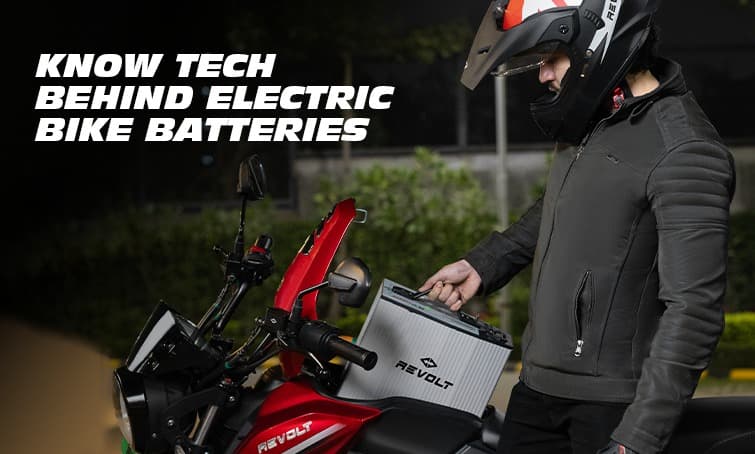
Have you ever wondered what keeps an electric bike going strong, ride after ride? If you're considering switching to an electric two-wheeler, understanding its heart, the battery, is where the real magic begins. We believe your ride should be powerful, safe, and exciting. And that’s exactly what we’ve packed into the electric bike's battery.
Relocation in the city or cruising on a bike, either way, the dual attribute of performance and preservation is something we never shy away from, and our battery makes sure of that. But why are our electric bike batteries renowned for being supportable, self-monitoring, and dependable? Let's have a closer look.
What Makes an Electric Bike Battery Truly Great?
A high-performing battery means more than just range. It's about safety, smart features, charging ease, and, most importantly, peace of mind. That’s why we’ve engineered the battery for everyday Indian roads, intense summers, and your toughest rides.
Impressive Range That Makes Sense
Electric bike batteries typically range from 300Wh to 700Wh in capacity. Higher capacity batteries, like 500Wh, can range from 80 km to 120 km on average. The RV400 comes with a 3.24 kWh lithium-ion battery. That’s enough to give you a real world range of up to 150 km on a single charge. And guess what? That means you can go for days without needing a top-up, especially if your daily rides are under 40 km.
| Ride Type | Cost (Approx) |
|---|---|
| Petrol Bike (50 kmpl @ ₹100/litre) | ₹2 per km |
| RV400 Electric Bike (₹6 per unit) | ₹0.13 per km |
You'd have to spend ₹100 if you want to drive 50 km; however, if you choose to ride the same distance, it will just take ₹6. Wild, isn't it?
Battery Life That Outruns Petrol Bikes
Quality electric bike batteries can retain at least 80% of their original capacity after 500-1000 charge cycles. RV400’s battery is built for long hauls of up to 2 lakh kilometres! That’s over 10 years of daily use if you commute 50 km daily.
| Daily Commute | Total KM/Year | Years Battery Will Last |
|---|---|---|
| 50 km | 18,000 km | 10+ Years |
Why worry about replacements every few years when you can ride stress-free for a decade?
| Feature | Revolt RV400 (Electric) | Typical Petrol Bike |
|---|---|---|
| Running Cost (per km) | ₹0.25 – ₹0.30 | ₹2.5 – ₹3.5 |
| Major Service Required | Rare (no oil/filter changes) | Every 3,000–5,000 km |
| Fuel/Battery Degrade | After 10+ years (~2 lakh km) | Engine wear after 40,000–50,000 km |
| Noise & Emissions | Silent, Zero emissions | Noisy, emits CO2 and other pollutants |
| Battery Warranty | 3 years or 40,000 kilometres (whichever occurs first) | NA (no engine warranty beyond 3–5 years) |
In the case of the RV400, you not only avoid all that hassle, but you also enjoy:
- A warranty on the battery of 3 years or 40,000 kilometres (whichever comes first)
- No carbon footprint, no exhaust, and no oil change services.
- Enjoy for over a decade smooth, quiet performance.
Fast Charging for Busy Lives
Electric bike batteries typically take around 2 to 6 hours to fully charge, depending on several factors such as battery size and charger type. Don’t want to wait around for hours? We get it. With our fast charger, the battery charges from 0 to 80% in just 80 minutes. Using the regular charger, a full charge takes around 4.5 hours. That’s faster than your phone sometimes!
Safety is Built into the Battery
We’ve spent many years refining battery safety, and guess what? Zero incidents of fire, smoke, or explosions. Yes, you read that right. Here's how we keep it that way:
Our battery is AIS-156 Phase I & II certified, approved by the Government of India
AIS-156 is a safety standard introduced by the Automotive Industry Standards (AIS) Committee under the Ministry of Road Transport and Highways (MoRTH) in India. It specifically outlines safety requirements for the traction batteries used in electric vehicles (EVs), especially two- and three-wheelers.
- Phase I focuses on basic battery safety checks like mechanical shock, thermal shock, overcharge, and short circuit resistance.
- Phase II introduces advanced safety requirements, including battery thermal management, fire resistance, data logging, and real-time communication with battery management systems.
Smart thermal alarms and current control systems prevent overheating
Your electric bike battery comes with built-in sensors that constantly monitor temperature and current flow. If the system detects that the battery is getting too hot or drawing too much current, it automatically slows down charging or cuts off power. This prevents dangerous situations like thermal runaway, which can lead to fires or battery damage.
Fire-rated parts are used throughout the system
To ensure complete fire safety, the entire battery system—from housing materials to wiring insulation—is made using fire-retardant materials. These parts are tested to resist flames and high temperatures, offering additional protection during rare but high-risk situations like collisions, overheating, or electrical faults.
Made for Indian Roads and Weather
From the scorching summers of Rajasthan to the chilling winters of the north, the RV400 battery works smoothly between -20°C and 55°C. And with passive cooling, it keeps it cool, literally. Passive cooling is a heat management method that doesn’t rely on fans, pumps, or any mechanical parts. Instead, it uses smart design techniques and heat-dissipating materials to allow heat to naturally escape from the battery.
Think of it like this: just as wide-open windows help a room stay breezy without a fan, the RV400 battery is structured to “breathe” out heat efficiently, without needing extra energy or moving parts.
Here’s how it helps you:
- No extra power draw: Since there are no fans or active components, it saves energy, improving battery efficiency and range.
- Less wear and tear: No moving parts means less maintenance and fewer chances of failure.
- Whisper quiet: Passive cooling is completely silent, which means your ride stays as smooth and quiet as possible.
- Tailored for Indian summers: With temperatures soaring beyond 45°C in many cities, a fan-based system could struggle—or even fail. Passive cooling, on the other hand, keeps things stable and consistent, ensuring your battery doesn’t overheat no matter how intense the heat.
Its IP67 rating protects it from dust and water, and its central placement improves balance and ride comfort. You’ll feel the difference in every turn and stop.
We Use the NMC Pouch Battery Pack
Our NMC pouch cells aren’t just high-tech; they’re smart. NMC stands for Nickel-Manganese-Cobalt, the three key materials used in the battery's chemistry. This combination strikes the perfect balance between energy density, longevity, and thermal stability, making it a top choice for electric vehicles.
Now, instead of the bulky cylindrical or rigid prismatic formats, pouch cells are packed in flexible, lightweight, laminated pouches—sort of like sleek, power-packed envelopes. Compared to cylindrical or prismatic cells, pouch cells are:
A) Slim and lightweight
Pouch cells are significantly slimmer and lighter than cylindrical batteries due to their soft packaging. This makes the bike lighter, thus improving acceleration, handling, and energy efficiency. Moreover, it provides a greatly enhanced design flexibility.
B) Better at Heat Control
Pouch cells retain balance over temperature because they distribute heat more uniformly, preventing hot spots from forming. Together with our passive cooling system, this allows stable performance even in harsh Indian conditions—no more concerns about overheating in summer traffic.
C) Higher Energy Density
You get more powerful energy while taking up less space. This means longer operational range, improved performance, and smaller-sized batteries without compromising strength. Ideal for everyday rides as well as for long distances.
D) Easier to Stack and Maintain
Pouch cells are modular and stackable, making them easier to assemble and maintain. If a cell requires some attention, technicians can more easily and efficiently service it, which improves battery life overall.
E) Lower Manufacturing Costs
Less complex to produce, pouch cells simplify the process and reduce costs without compromising quality. This makes high-performance electric mobility more affordable for everyone, and that's how we keep our promise of value.
Built-In Smart Battery Management System (BMS)
The smart features of the RV400 battery mean its health management system monitors the battery's interaction with the bike's system, checks temperatures and charging, and even load balancing across cells.
A) Smart Derating Avoids Overheating
If during the ride the temperatures approach the upper limit, for example, in high-speed stretches or long rides, the BMS temporarily lowers the power output level. This concept is termed as derating, which helps the battery maintain optimal working conditions. When this happens, you get protected without having to as much as notice—now that's smart protection.
B) Controlled Charging for Maximum Capacity and Safety
The mechanism is also more effective in controlled charging, where all cells are charged at a specific rate—some may be undercharged while others overcharged—that's monitored in real time. This takes the performance and lifespan of the battery to an entirely new level. This makes it more efficient and safe, especially with rapid charging, avoiding over temperature, and the additional stress placed on the battery pack.
C) Five-Level Protection with Auto Cut-Off Features
With the auto cut-off feature, the RV400 can withstand explosive protective performance at five different levels:
- Overcharge Protection
- Over-discharge Protection
- Overheat Protection
- Overcurrent Protection
- Short Circuit Protection
If an outer level surpasses the measurable value of safety, the BMS cuts off the power supply immediately to stop any damage that can be easily done. If you need one, life’s off.
D) Safely Handles Deep Discharge
Sometimes, you might drain your battery completely. Many batteries get damaged when this happens, but not the RV400. Its BMS is designed to handle deep discharges without harm, preserving battery health and performance. This means you don’t need to panic if you ride till the last drop of juice. Just charge it back up, and you’re good to go.
Charging Like Never Before
No need to install anything fancy. Just plug the battery in at home, just like your phone. You can charge it on the bike or take it out and plug it in anywhere. Forget charging stations or battery swap worries. Just charge, ride, repeat.
Intelligent App Integration for Full Control
Not all electric bikes allow you to control your bike with smart features. But you can track your battery status, range, and charging through our MyRevolt App. It even lets you: