

Real Running Cost of Electric Bikes in India 2025 Explained
Imagine you’re riding your petrol bike with your friends, enjoying the cool breeze and the freedom of the road. Life feels good. But then, you look at the fuel meter. It’s almost empty. You stop at a petrol pump, and as the petrol goes in, your money goes out. ₹100... ₹200... ₹500... just like that. And that’s not all; you also spend on oil, servicing, and small repairs every now and then.
Slowly, it starts to feel heavy on your pocket. Now, imagine riding the same way, without spending so much on fuel or maintenance. That’s the big advantage of electric bikes. They’re cheaper to run, and more and more people in India are now choosing them over petrol bikes. But the real question is - what does it really cost to run an electric bike in India?
In this blog, we’ll break down the real-world running costs of electric and petrol bikes from petrol to electricity charges, maintenance, battery replacement, and more.
What Does “Running Cost” Really Mean?
Running cost refers to the day-to-day expenses of using a vehicle and everything you spend after you’ve bought the bike. For petrol bikes, this primarily includes:
- Fuel costs
- Maintenance (engine oil, air filter, spark plugs, etc.)
- Servicing
For electric bikes in India, the primary costs are:
- Electricity for charging
- Battery maintenance/replacement
- Minimal servicing
While petrol bikes bleed your wallet at petrol pumps, electric bikes silently use electricity. But how much does that electricity cost? And what about maintenance?
Let’s break this down with real numbers.
Daily Running Cost Comparison Between Petrol and Electricity
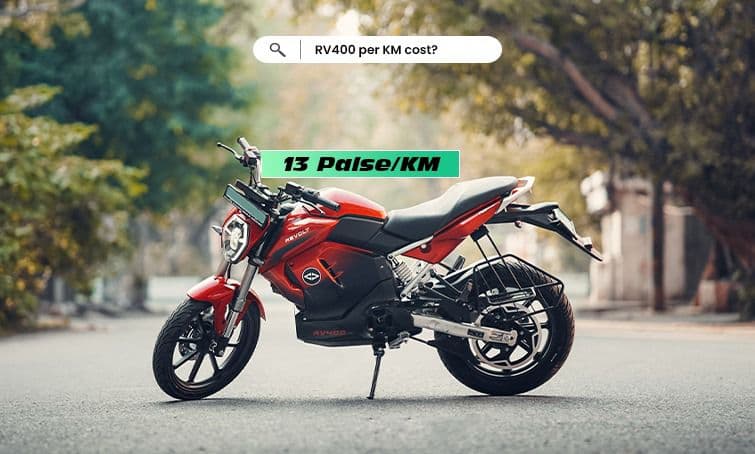
Let's calculate the daily running cost of RV400 compared with a petrol bike. The Revolt RV400 has a 3.24 kWh battery and can run for up to 150 kilometers on one charge. Now let’s see how much it costs to fully charge it:
- Average electricity tariff in India = ₹6/unit
- Battery size = 3.24 kWh
- Cost per full charge = 3.24 × ₹6 = ₹19.44 (average)
- Cost per km = ₹19.44 / 150 km ≈ ₹0.13/km
So, if you travel 50 km per day, your daily running cost is:
- 50 × ₹0.13 = ₹6.50/day
Now, let’s take the example of a standard 125cc petrol bike with the following stats:
- Average Mileage: ~50 km/litre
- Current Petrol Price (India average): ₹105/litre (may vary by city)
- Cost per km = ₹105 ÷ 50 = ₹2.10/km
So, if you travel 50 km per day, your daily running cost is:
- 50 × ₹2.10 = ₹105/day
Maintenance Costs
Traditional petrol bikes have:
- Engines
- Clutches
- Gearboxes
- Oil filters
- Exhaust systems
- Fuel lines
That’s a lot of moving parts. And more parts = more maintenance.
An electric bike in India doesn’t have any of these. Most electric bikes in India have a mid-drive motor and a belt or chain drive. With fewer moving parts, there’s very little that can go wrong.
Here’s what you don’t need:
- Engine oil changes
- Fuel filter replacements
- Gear oil
- Spark plug replacements
Routine servicing? Minimal.
Estimated Annual Maintenance
- Petrol bike: ₹3,000–₹6,000/year
- Electric bike in India: ₹500–₹1,500/year (mostly for consumables like brake pads)
Battery Life and Replacement Cost
Battery replacement is where most buyers hesitate. However, here’s what you should know:
- Average battery life of an electric bike: 1200 full charge cycles
- That’s roughly 1,50,000 to 1,80,000 km if you charge fully each time
- Most users will need a replacement only after 6–8 years
As of now, battery replacement may cost around ₹50,000–₹60,000. But:
- Prices are falling every year
- By the time you need a replacement, newer, better, cheaper batteries will likely be available
- Many EV companies, including Revolt, are exploring battery leasing models to reduce upfront replacement costs
Spread over 6–8 years, even a ₹60,000 battery equals ₹750–₹1,000/month. It’s a tiny amount compared to petrol bills.
Smart Features That Save You More
Electric bikes (like the RV400) offer a lot of smart features that add value without adding to cost. For example, Revolt electric bikes have the MyRevolt App that has amazing features like:
- Geo-fencing prevents theft and misuse
- Remote start/stop adds convenience
- Trip data helps optimise riding habits
- Battery health tracking prevents expensive breakdowns
These aren’t “just gadgets”; they actively reduce your chances of breakdowns, towing, or theft, all of which cost money in petrol bikes.
Cost of Ownership: 5-Year Snapshot
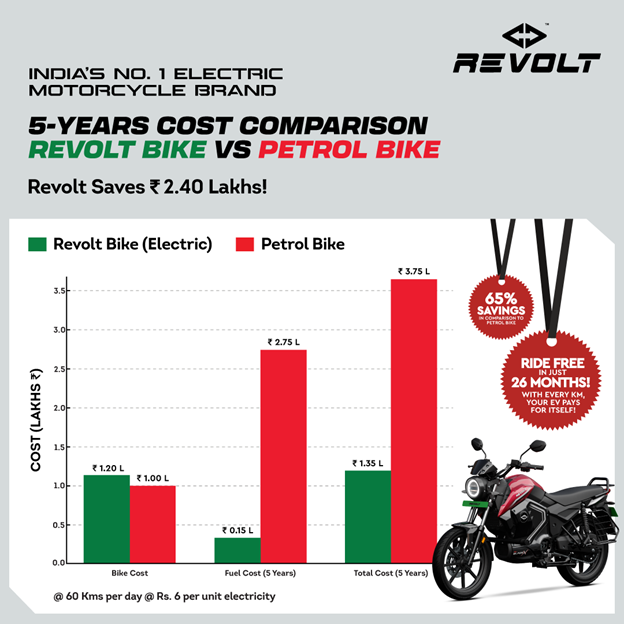
| Category | Petrol Bike (Avg.) - 5 Years | Electric Bike (Avg.) - 5 Years |
|---|---|---|
| Fuel / Electricity (30,000 km) | ₹2,75,000 | ₹15,000 |
| Maintenance | ₹12,000 - ₹20,000 | ₹3,000 - ₹5,000 |
| Servicing | ₹6,000 - ₹10,000 | ₹1,500 - ₹2,500 |
| Avg. Bike Price | ₹1,00,000 | ₹1,20,000 |
| Total Running Cost (5 years) | ₹3,75,000 | ₹1,35,000 |
The Real ROI: Break-even in Under 26 Months!
While petrol prices keep rising and ICE maintenance gets more complex, the RV400 quietly saves you money, ride after ride. Add to that:
- A robust charging ecosystem (charge at home or carry the battery)
- Zero fuel queues
- Stylish looks and smart tech
- Massive cost savings year-on-year
In fact, Revolt claims that your RV400 will pay for itself in just 26 months, and it’s easy to believe when you consider the massive savings on fuel and service.
Unlike petrol bikes, where resale values drop due to high wear and tear, EVs with lower mechanical stress retain better value.
Final Thoughts
Buying an electric bike in India isn’t just about being green or trendy anymore; it’s a smart, financially sound decision. And with electric bikes, you’re not compromising on power, performance, or features. The real running cost of an electric bike in India can be unbelievable sometimes.
The Revolt RV400 proves that an electric bike can be powerful, practical, and extremely cost-effective. Yes, the upfront price of an electric bike in India might be a tad higher than a petrol bike. But the total cost of ownership makes electric bikes a much better value proposition than petrol bikes.
Stop spending on fuel, start investing in freedom. Browse the feature-loaded RV400 on our website and book your ride today!