

Braking Performance on the RVX: How It Stops as Fast as It Goes
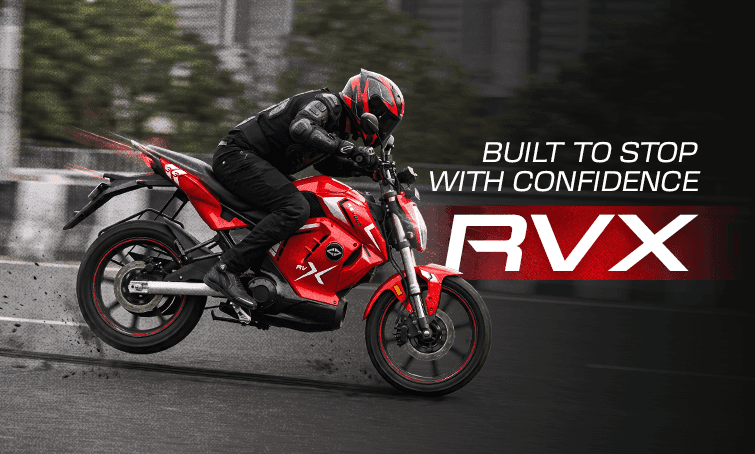
A bike that accelerates hard but can’t stop with equal confidence isn’t actually a performance bike — it’s a liability. This is a detail that gets lost in most electric bike marketing, which loves talking about acceleration numbers but goes quiet on the equally important question: how well does it stop?
On the Revolt RVX, braking isn’t an afterthought. It’s engineered to match the bike’s performance character, not just meet a minimum safety requirement.
Why Braking Matters More on a Faster Bike
If you’ve read 0 to 40: Breaking Down the RVX’s Real-World Acceleration, you already know this bike gets up to speed quickly. That’s a genuine advantage in traffic — but it only remains an advantage if the bike can shed that speed just as confidently when you need it to.
Think about the actual riding scenarios where strong acceleration matters most: overtaking a slow vehicle, merging into a gap in traffic, moving quickly off a signal. Every one of those scenarios can just as easily require a sudden, hard stop moments later — a pedestrian stepping out, a vehicle braking unexpectedly ahead, a pothole appearing out of nowhere. A bike that’s fast in one direction but hesitant in the other is only solving half the problem.
Combined Braking System (CBS): What It Actually Does
The RVX uses a Combined Braking System, which links the front and rear brakes so that applying one activates both in a balanced, proportional way. In practical terms, this means:
More consistent stopping distances, even if a rider instinctively grabs only the front or rear brake in a panic situation
Reduced risk of rear-wheel lockup and skidding, which is one of the more common causes of loss of control during emergency braking
A more predictable stopping feel across different speeds — whether you’re braking from 20 kmph in city traffic or from a higher speed on an open stretch
This matters especially for newer riders, or riders switching from a petrol bike where braking habits were built around a different system. CBS smooths out the margin for error without requiring the rider to become a braking expert overnight.
How This Pairs With the RVX’s Other Safety-Adjacent Features
Braking doesn’t exist in isolation — it works alongside features like Hill Hold, which prevents rollback on inclines, and the bike’s overall low-speed control through Walk Assist. Together, these features form a broader safety-and-control package that goes beyond just "the bike is fast."
It’s also worth connecting this back to torque and acceleration. As covered in RVX Torque Explained, the RVX’s 230 Nm wheel torque means the bike builds speed very quickly — which makes a well-tuned, balanced braking system not just a nice-to-have, but a genuine requirement for the bike to feel trustworthy at the speeds it’s capable of reaching.
What This Means for Everyday Riders
You don’t need to be a performance enthusiast to benefit from good braking. Every commuter deals with sudden stops — a car door opening unexpectedly, a dog running into the road, a signal changing faster than expected. The RVX’s braking setup is built to make those moments feel controlled rather than panicked, regardless of whether you ride cautiously or push the bike closer to its performance limits.
The Physics Most Riders Never Think About
Here’s something worth understanding: a heavier, faster-accelerating vehicle needs proportionally stronger and better-calibrated braking to stop in the same distance as a lighter, slower one. This is basic physics, but it’s routinely ignored in how bikes get marketed. A manufacturer can boost acceleration numbers relatively cheaply; building a braking system that scales properly with that added performance takes more careful engineering.
This is precisely why the RVX’s braking setup deserves as much attention as its torque and acceleration figures. A bike that’s tuned to accelerate hard but wasn’t equally tuned to stop hard isn’t actually a well-balanced machine — it’s a half-finished one.
What Riders Coming From Petrol Bikes Should Know
If you’re switching from a petrol commuter motorcycle, your braking instincts were built around that bike’s specific weight distribution and brake response. Electric bikes like the RVX often feel different under braking — partly because of the weight of the battery pack, and partly because instant torque means you may be travelling faster than you realize by the time you need to slow down.
This is exactly why CBS matters so much for new EV riders specifically. It reduces the learning curve by making the braking response more forgiving and predictable, rather than requiring you to relearn your exact braking habits from scratch on day one.
Braking in the Rain: A Genuinely Underrated Concern
India’s monsoon season puts braking systems to the real test, and this is an area where a poorly balanced system becomes genuinely dangerous rather than just inconvenient. Wet roads reduce tyre grip significantly, and a braking system that isn’t well-calibrated can easily trigger a skid, especially on the rear wheel.
The RVX’s CBS setup is designed to distribute braking force more evenly, precisely to reduce this risk — though no braking system, however good, replaces the need for reduced speed and increased following distance in wet conditions. If monsoon riding is a regular part of your commute, it’s worth building in extra caution alongside trusting your bike’s braking hardware alone.
Brake Maintenance: What Ownership Actually Looks Like
Good braking performance isn’t just about what’s engineered into the bike on day one — it also depends on maintenance over time. Brake pads wear down, and even the best-designed CBS system needs periodic checks to perform at its best. This ties into the broader ownership conversation covered in Revolt’s maintenance guide, which is worth a read regardless of which model you’re riding.
Bringing Go and Stop Into Balance
The most important thing to understand about the RVX’s braking system is that it wasn’t designed in isolation — it was designed as the counterpart to the bike’s acceleration and top speed capability. A bike this quick off the line, capable of reaching 90 kmph* in Boost Mode, needs braking that can match that character point for point. That’s exactly the philosophy behind how Revolt approached the RVX’s braking setup — not as a checkbox requirement, but as an equally important half of the performance equation.