

0 to 40: Breaking Down the RVX's Real-World Acceleration
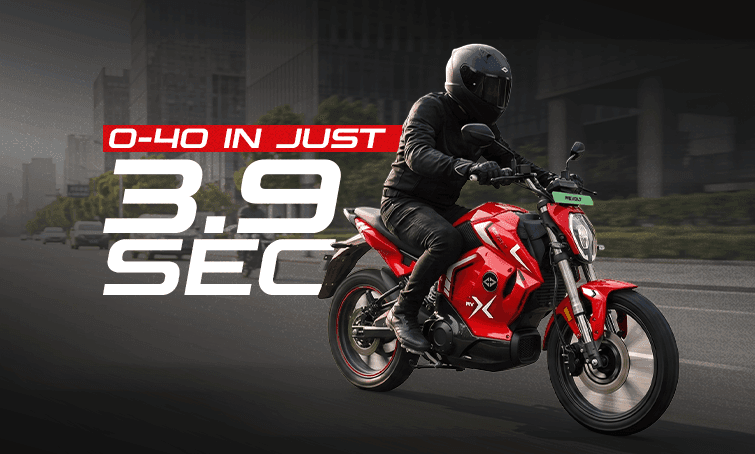
Spec sheets say a lot of things. "0 to 40 kmph in 3.9 seconds*" is a real, verified number for the Revolt RVX, taken directly from the official signed specification sheet — but numbers on paper rarely tell you what actually matters: what does that feel like when you’re stuck between two buses at a signal, trying to get moving before the gap closes?
This isn’t a repeat of the numbers already covered in RVX Performance Explained or RVX Top Speed and Boost Mode Features. This is a real-world review lens on what that number actually means on the road — tested against genuine Indian traffic scenarios, not a closed test track.
The First Half-Second Is Where It Happens
Most riders assume acceleration is about the finish — how fast you’re going by the time you hit 40. But the part that actually changes how confident you feel is the first half-second: does the bike respond immediately, or is there a beat of hesitation while something "spools up"?
On the RVX, there’s no spooling up. The moment you twist the throttle, the 50 Nm motor torque is already there. That’s the real story behind the 3.9 second* number — it’s not that the bike is slow to start and then catches up, it’s that the acceleration is consistent from the very first instant, which matters more in stop-start Indian traffic than a slightly quicker number achieved in ideal test conditions.
What 3.9 Seconds Actually Buys You
To put this in context: a typical Indian traffic signal gap — the moment between the light turning green and the vehicle ahead of you actually starting to move — is often under 2 seconds. A bike that takes its time building speed effectively wastes that gap. The RVX doesn’t.
In practical terms, this means:
Merging into moving traffic from a side road happens in one confident motion, not a nervous crawl-and-hope.
Overtaking a slow-moving vehicle on a single-lane stretch takes less time exposed on the wrong side of the road — which matters more for safety than most riders realize.
Keeping pace with faster traffic on flyovers and highway stretches feels natural instead of like you’re constantly playing catch-up.
Testing It Yourself: What to Actually Notice
If you get the chance to test-ride an RVX, don’t just glance at a speedometer. Pay attention to:
How the bike feels the instant you twist the throttle — is there any delay, or is it immediate?
How your body reacts — genuine strong acceleration produces a noticeable backward pull; if you don’t feel it, the number on paper isn’t translating to the road.
How it compares carrying a passenger — acceleration numbers are almost always tested solo, so it’s worth feeling the difference with two people onboard, especially combined with the RVX’s Hill Hold feature if you’re testing on an incline.
Acceleration Isn’t Just About Speed — It’s About Control
Fast acceleration only matters if it’s controllable. This is where the RVX’s braking system comes into the conversation — a bike that can get to 40 kmph quickly but can’t stop with equal confidence isn’t actually safer, it’s just faster. Revolt has engineered the RVX so both ends of that equation — go and stop — feel proportionate to each other.
Scenario One: The Signal Sprint
Picture a typical four-way signal in any Tier-1 Indian city. The light turns green. In front of you: a scooter, an auto-rickshaw, maybe a cyclist weaving through. Every rider ahead of you accelerates at a different pace, and the gap that opens up in front of you closes fast if you hesitate. This is where the RVX’s acceleration profile does its best work — not on an empty highway, but in exactly this kind of chaotic, multi-vehicle scramble.
Scenario Two: The Highway Merge
Merging onto a highway service road from a stop is one of the more nerve-wracking moments for any rider, especially on a bike that’s slow to build speed. Here, the RVX’s acceleration works alongside its 90 kmph* top speed in Boost Mode to make merges feel like a smooth transition rather than a stressful gamble.
What Slows Acceleration Down
A lot of riders don’t realize that acceleration figures on any bike, petrol or electric, can be affected by rider weight and passenger load, riding mode selected (Eco Mode intentionally limits aggressive power delivery to preserve range, while Boost Mode unlocks the full figure), and road surface or incline. None of this is unique to the RVX — it’s true of any vehicle — but it’s worth knowing so your expectations on test-ride day are calibrated correctly.
The Verdict
3.9 seconds* to 40 kmph is a genuinely strong, usable number for this price segment of new electric bikes in India. What matters most isn’t the number in isolation — it’s that the RVX delivers that acceleration in a way that feels immediate, predictable, and confidence-building rather than jerky or delayed, backed by a broader package of range, charging speed, and rider-assistance features that a single acceleration figure doesn’t capture.