

Things to Know About the Battery Charging Time for an Electric Bike
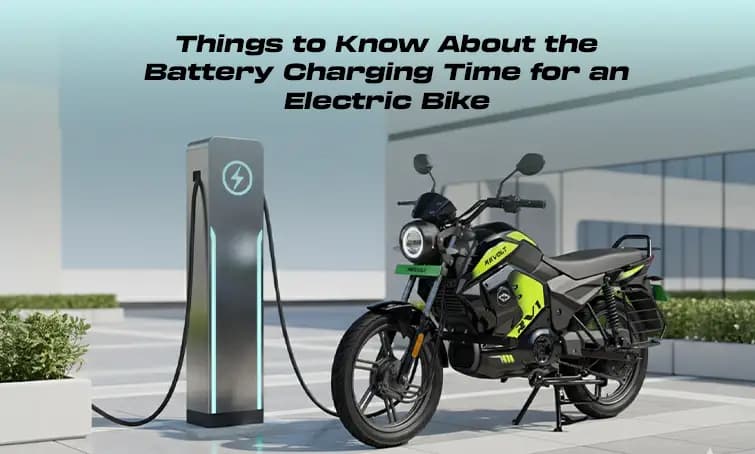
The electric bike charging time directly defines how practical an electric bike truly is. For everyday riders, every minute spent charging can make a difference in how smoothly their routine runs. From quick commutes to long city rides, the balance between charging speed and efficiency decides how effortless ownership feels.
That’s why bikes like the Revolt RV 1 stand out, engineered with an intelligent battery management system that optimizes power flow and shortens charge cycles without compromising performance. Understanding these factors helps riders plan better and get more out of every ride.
What Determines Your Electric Bike Charging Time
Several practical factors affect how long your electric bike takes to charge:
- Battery Capacity: Larger batteries store more energy but take longer to fill.
- Charger Output: The higher the ampere rating, the faster the electric bike charging time will be.
- Current Charge Level: Charging battery charging time for electric biking from 20% will take longer than topping up from 60%.
- Temperature: Cold or hot environments affect battery chemistry, slowing the charging rate.
- Battery Age: With time, lithium-ion cells lose efficiency, which increases charging duration.
In modern EVs like the Revolt RV 1, this balance is optimized with smart charging that regulates power flow to maintain battery health while keeping charge times short.
Common Types of Electric Bike Chargers
Every rider should understand the charger that comes with their bike, because it directly influences the electric bike charging time.
- Standard Chargers: Usually 5A–7A, ideal for overnight charging.
- Fast Chargers: Higher current (10A–15A) can get you from 0–80% in around 80–90 minutes.
- Smart Chargers: Automatically cut off when the battery is full to prevent overheating.
For instance, the charger supplied with the RV1 supports fast charging EV capability while ensuring thermal stability, which helps maintain consistent performance and safety over long-term use.
How to Estimate Your Charging Duration
You can calculate your approximate electric bike charging time with this simple formula:
Charging time (hours) = Battery capacity (Ah) ÷ Charger output (A)
If your bike has a 30 Ah battery and a 10 A charger, it will take roughly 3 hours for a complete charge. Real-world results depend on temperature and voltage fluctuations, but efficient models like the Revolt RV 1 come close to the theoretical numbers because of their optimized charging systems.
Best Charging Practices for Everyday Riders
Good habits can make a big difference in both performance and battery lifespan:
- Avoid letting the charge drop below 20%
- Partial charges are fine — no need for full discharges every time
- Allow the battery to cool before charging after long rides
- Use a grounded socket with surge protection
- Unplug once fully charged to prevent power waste
These habits help reduce your ebattery charging time for electric bikes while extending the overall lifespan of your EV’s battery pack.
How Fast Charging Impacts Battery Health
Fast charging EV systems are a game-changer for people who need quick turnaround times. However, constant fast charging can raise battery temperatures, which slightly impacts long-term capacity. Modern bikes like the Revolt RV 1 manage this risk using temperature sensors and smart controllers, ensuring you get the convenience of speed without sacrificing longevity.
It’s best to use fast charging when you’re short on time and rely on standard overnight charging for routine use. This balance keeps your EV battery charging cycles stable and reliable.
Factors That Can Slow Down Charging
If you notice that your electric bike charging time is increasing, check for the following:
- Voltage irregularities at your home socket
- Dust or moisture around the charging port
- Aging battery cells
- Temperature extremes
Routine maintenance can restore normal charging performance. The RV 1, for instance, comes with a weather-resistant charging interface and advanced battery diagnostics, reducing such delays automatically.
Charging Smart at Home and in Public
Most riders prefer home charging for its convenience and lower cost. Public charging stations, however, are excellent for quick top-ups during the day. The RV 1 supports both standard and fast charging EV bike infrastructure, making it ideal for city commuters.
When charging in public, always ensure compatibility with your electric bike’s voltage and connector type. Having a bike that supports multiple charging options gives you more flexibility and peace of mind wherever you go.
Smarter Charging Means Better Riding
The electric bike charging time is not just about waiting; it’s about understanding how to get the best performance, longer battery life, and safer rides. When thoughtful charging habits meet cutting-edge technology, every ride becomes seamless, efficient, and consistently dependable.
With innovative design, quick-charge capability, and proven reliability, the Revolt RV 1 shows how practical engineering can make charging almost effortless. It’s a strong example of how modern electric bikes can combine performance with sustainability, giving riders the freedom to travel more while charging less.
The more you understand your bike’s battery system, the better control you have over its performance, and that’s what makes the RV 1 a smart companion for the future of electric mobility.