

Best Electric Motorcycles in India: The Complete Buyer's Guide
Choosing an electric bike or motorcycle in India in 2026 means navigating dozens of models, conflicting spec claims, and a genuinely fast-moving market. This guide isn't another ranked list, it's a decision framework to help you figure out what actually matters for your specific situation before you compare a single spec sheet.
Step 1: Define Your Actual Daily Distance
Before anything else, know your real daily commute distance, not an estimate. This single number should drive most of your range-related decisions. A 20-30 km daily commute doesn't need a 180 km range bike, a 200 km range in that scenario is mostly unused capacity you're paying for. A 50-60 km daily commute genuinely benefits from higher-range options to avoid frequent charging anxiety.
Step 2: Understand Where You'll Actually Charge
This matters more than most buyers initially think. If you have a dedicated parking spot with power access, a fixed-battery or removable-battery bike both work fine. If you're in a hostel, PG, or apartment without dedicated charging, a genuinely removable battery that you can carry indoors becomes close to a non-negotiable requirement, not just a nice-to-have feature.
Step 3: Set a Realistic Budget, Including Subsidies
Don't shop purely on ex-showroom price. Government subsidies, both central PM E-DRIVE and state-level incentives, can meaningfully shift your effective budget. A bike listed at ₹1,29,990 could effectively cost ₹95,000-1,00,000 after combined subsidies in a strong-incentive state like Delhi. Know your post-subsidy number before comparing models against your budget ceiling.
Step 4: Decide How Much Performance You Actually Need
Be honest here. If your riding is entirely city commuting at moderate speeds, you don't need a bike built around highway performance credentials. If you regularly ride longer stretches, merge into fast-moving traffic, or simply want the confidence of strong acceleration, prioritize torque and top speed figures more heavily in your comparison.
Step 5: Weigh Connected Features Honestly
App connectivity, geo-fencing, OTA updates, and voice commands are genuinely useful for some riders and largely irrelevant to others. If you value being able to locate your bike remotely, receive security alerts, or manage settings from your phone, prioritize brands with a mature connected ecosystem, like Revolt's MyRevolt platform. If these features don't matter to you, don't let marketing around them inflate your perceived need for a pricier model.
Step 6: Check Warranty Terms Specifically, Not Just Their Existence
Every brand claims to offer a battery warranty. What varies significantly is the actual term length and coverage conditions. An 8-year, 80,000 km battery warranty is a meaningfully stronger commitment than a 3-year term, since the battery is the single most expensive component you're protecting. Compare this number directly across your shortlist rather than assuming all warranties are roughly equivalent.
Step 7: Verify Service Network Strength in Your Specific City
A strong spec sheet means little if genuine service support isn't available near you. Before finalizing any purchase, confirm the brand's actual service center presence in your city, not just their national footprint claims, since coverage can be uneven even for well-known brands.
Step 8: Test Ride Before Deciding, Genuinely
No spec sheet comparison replaces feeling a bike's throttle response, seating comfort, and overall character in person. Differences that seem marginal on paper, like instant torque delivery or riding mode transitions, are often the most noticeable in actual riding and the hardest to judge without direct experience.
A Worked Example: Applying the Framework
Consider a hypothetical buyer commuting 35 km daily in a mid-sized city, living in an apartment without dedicated parking access, with a budget around ₹1.3 lakh after expected subsidies. Working through the framework: their daily distance suggests a 150-160 km range bike is sufficient without excess, their charging situation makes a removable battery close to mandatory, their budget places them squarely in the competitive ₹1-1.5 lakh bracket, and without a stated strong preference for maximum performance, a balanced option prioritizing connected features and warranty strength fits better than a performance-first model. This kind of systematic walkthrough, rather than jumping straight to comparing marketing claims, is what actually narrows a genuinely large market down to a workable shortlist.
Questions to Ask at the Dealership, Not Just Online
Once you've narrowed your shortlist using this framework, bring a specific list of questions to the dealership rather than relying purely on what's published online: current subsidy eligibility and exact post-subsidy price, real average service turnaround time at their specific service center, and whether the exact battery warranty terms match what's advertised online for that specific model year. Dealership-level answers to these three questions often reveal more relevant, current information than any published spec sheet.
Putting the Framework Together
Once you've worked through these seven steps, you'll typically arrive at a shortlist of two to three models rather than facing the entire market. From there, a direct comparison of specifications and a test ride of each shortlisted option is the most reliable way to make a final decision.
Where the RVX Fits This Framework
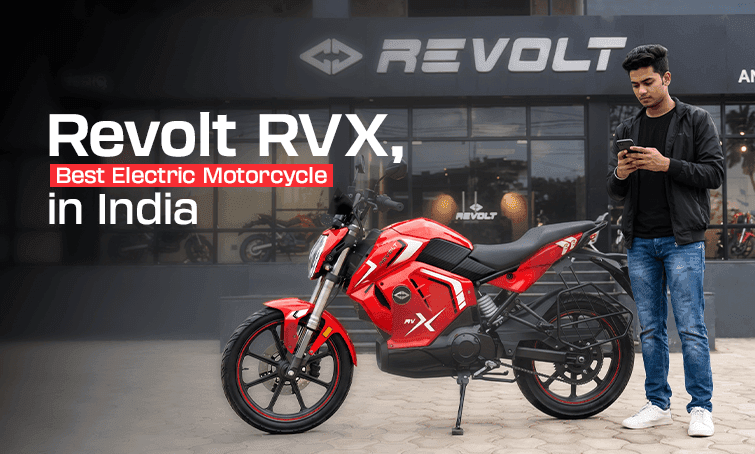
For a mid-range daily commute (30-50 km), riders who want genuine connected features and confident performance without stepping into the ₹2 lakh-plus bracket, and buyers who value a strong, clearly defined battery warranty, the Revolt RVX is a strong candidate worth including on most shortlists built through this framework.
When to Deviate From This Framework
No framework fits every buyer perfectly, and it's worth acknowledging the exceptions. If you have a specific emotional attachment to a particular model, brand, or design aesthetic, that preference is a legitimate factor even if it doesn't score highest on a purely functional framework like this one. Vehicle ownership satisfaction isn't purely rational, and a bike you're genuinely excited to ride every day has real value beyond what a checklist captures. Use this framework to avoid an obviously poor-fit purchase, not to override a strong, informed personal preference once you've confirmed the basics, budget, charging access, and warranty terms, are genuinely sound.
Conditions apply. Figures marked with an asterisk are claimed/rated values based on internal testing under standard conditions. Actual performance may vary depending on riding conditions, road and terrain, load, tyre pressure, rider weight, and riding style.