

Government Subsidy for Electric Bikes in India: A Complete Guide
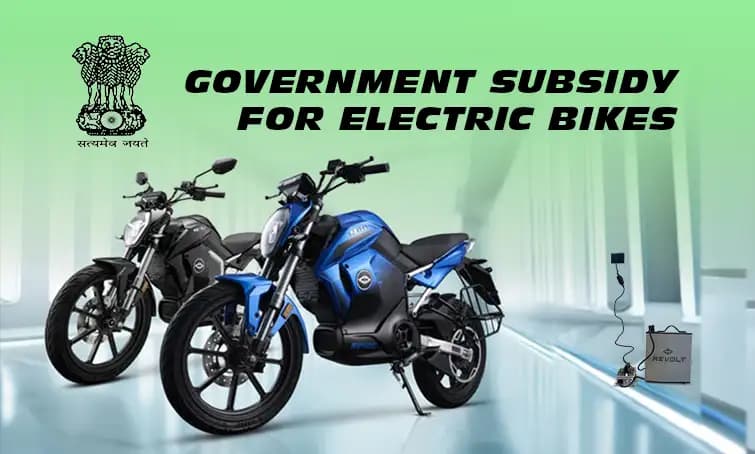
India's electric vehicle wave is here, and if you're thinking about getting an electric bike, government subsidies can still help you save. But subsidy rules change fast, and a lot of information circulating online is outdated. This guide has been updated for 2026 with verified figures from official and trusted sources, so you know exactly what's real before you buy. Last updated: August 2026. Subsidy schemes are fund-limited and time-bound, so we recommend confirming current status directly with your dealership at the time of purchase, in addition to reading this guide. Simple: India wants to go green. To reduce pollution and dependence on fossil fuels, the government offers financial incentives to make EVs more affordable. These subsidies reduce your upfront cost directly, applied as a discount at the point of purchase rather than something you claim afterward. PM E-DRIVE (Prime Minister Electric Drive Revolution in Innovative Vehicle Enhancement) is the scheme that replaced the older FAME-II program, and it's the one relevant to buyers today. Here's what's genuinely confirmed, verified against the official scheme portal: Subsidy amount: ₹2,500 per kWh of battery capacity, capped at ₹5,000 per vehicle or 15% of the ex-factory price, whichever is lower. In practice, because most electric two-wheeler batteries are 2 kWh or larger, the ₹5,000 flat cap is what applies for nearly every eligible bike, regardless of battery size. What this means for a bike with a 3.24 kWh battery: 3.24 × ₹2,500 = ₹8,100 on paper, but the actual subsidy is capped at ₹5,000, since that's the lower of the two limits. This is an important correction worth knowing, since some older or unofficial sources still quote the uncapped calculation as the actual benefit. Eligibility: Vehicle must be priced at or below ₹1.5 lakh (ex-factory), fitted with an advanced battery chemistry (such as NMC or LFP), and available for both private and commercial use. Manufacturers are also required to provide a minimum warranty on the vehicle to qualify. Deadline: The scheme's electric two-wheeler window was extended from its original March 31, 2026 cutoff to July 31, 2026. As of this writing, we could not confirm whether a further extension has been granted beyond that date, or whether the two-wheeler component has closed. Given the scheme is fund-limited and reportedly close to its allocated budget, please confirm current status directly with your dealership before assuming this subsidy is still available. Also Read: What is the PM E-Drive Scheme? The FAME-II scheme was India's central EV subsidy policy before PM E-DRIVE, and it has been fully discontinued since March 31, 2024. It is included here only for historical context — if you see FAME-II mentioned as a currently active scheme anywhere, that information is outdated. The Electric Mobility Promotion Scheme (EMPS) 2024 was a short-term, transitional program designed to bridge the gap between FAME-II ending and PM E-DRIVE launching. It has since been fully superseded by PM E-DRIVE and is not a scheme you can currently apply under. State subsidies can stack on top of central schemes, which is often where the real savings add up. Below is a general reference — state EV policies are updated independently and more frequently than central schemes, so treat this as a starting point and confirm exact current figures with your dealership or your state's official EV policy page: Delhi's policy specifically has seen multiple extensions and revisions — see our dedicated posts on Delhi's EV Policy 2.0 and the policy's extension timeline for the most current detail on that state specifically. Odisha's policy is covered separately as well, in our Odisha EV Policy explainer. The good news: you don't need to personally file anything with the government. The process is handled by your dealership. Step 1 — Buy an eligible EV. Confirm with your dealer that the specific model is currently certified under PM E-DRIVE. Step 2 — Share your documents at the dealership. You'll typically need Aadhaar, address proof, purchase invoice, bank account details, and vehicle registration documents. Aadhaar e-KYC is mandatory — without it, the subsidy cannot be processed. Step 3 — The dealer handles the rest. They log into the official PM E-DRIVE portal, generate an e-voucher after your e-KYC, and you digitally sign it. Step 4 — Subsidy applied automatically. The discount is reflected directly on your invoice price. You don't wait for any reimbursement personally — that happens between the dealer and the government. 1. Subsidies vary by city as well as state — in Delhi NCR specifically, the vehicle typically needs to be registered within city limits to qualify for the state-level benefit. 2. Only advanced battery chemistries (like NMC or LFP) qualify — check this with your dealer if you're unsure about a specific model. 3. Buy only from authorised dealerships participating in the government scheme — not every dealer is registered. 4. Used electric bikes are not eligible. Only new purchases qualify. 5. Given the scheme's fund-limited nature and its uncertain status beyond July 31, 2026, confirming current availability before you commit to a purchase timeline is genuinely important right now, not just a formality. If you're exploring your options, the Revolt RVX is worth a look. With a 3.24 kWh battery, it falls within the battery specification typically supported under PM E-DRIVE, and its price point is designed to stay within the scheme's eligibility threshold — though as covered above, confirm current subsidy availability directly with your dealership given the scheme's evolving deadline status. We've also written a dedicated breakdown of what RVX buyers specifically can save through current government incentives, worth reading alongside this general guide. Book a test ride to see the RVX for yourself. If it's genuinely still available at the time you're buying, yes — it's a straightforward way to reduce your upfront cost with no extra paperwork on your end beyond standard KYC. Combined with state-level benefits, the effective discount can meaningfully lower your total purchase price. Even without a subsidy, the ongoing savings from lower running costs and reduced maintenance remain a strong reason to consider the switch. But given how close this specific scheme is to its funding limit and deadline, verify current status before treating any subsidy figure as guaranteed.Why Is There a Subsidy for Electric Vehicles?
Central Government Schemes: What's Actually Active in 2026
1. PM E-DRIVE Scheme — The Current Central Policy
2. FAME-II Scheme — Fully Discontinued
3. EMPS 2024 — Also No Longer Active
State Government Subsidies: What Does Your State Offer?
How to Apply for the Subsidy (Step-by-Step)
Key Points to Note
See What Qualifies: The Revolt RVX
Final Thoughts: Should You Use the Subsidy?