

History of Electric Vehicles: Evolution from the 1800s to Modern EVs
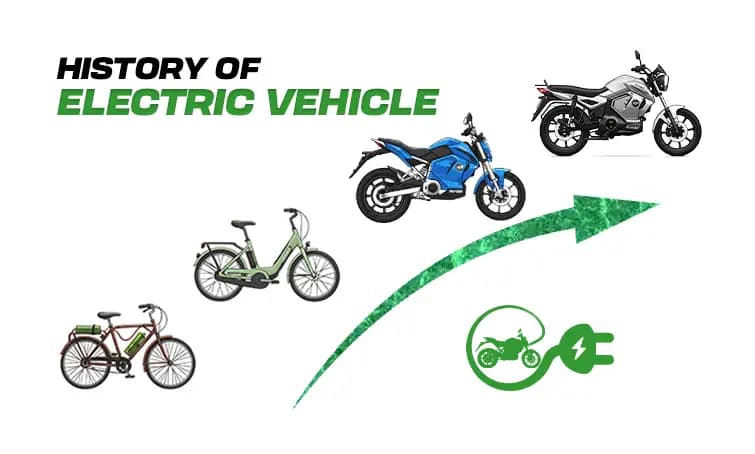
If you look back at the evolution of electric vehicles, it’s almost like flipping through a storybook of invention, decline, and revival. From experimental carriages in the 1800s to sleek modern EVs on today’s roads, the journey reflects not just technology but also changing lifestyles and policies.
Let’s dive deep into the history of electric vehicles and explore how they have evolved across centuries, and where they are headed.
The Spark in the 1800s: Origins in the History of Electric Vehicles
The history of electric bikes dates back to the early 19th century, when inventors like Robert Anderson and Ányos Jedlik experimented with crude battery-powered vehicles.
By the late 1800s, electric bikes began appearing on city streets, offering a quieter and cleaner alternative to steam and petrol engines. Advances in battery technology during the 20th century, particularly with lead-acid and later lithium-ion batteries, gradually made electric bikes more practical.
Today, in the 21st century, modern electric bikes feature smart battery management and efficient motors, providing sustainable and convenient transportation for urban commuters and recreational riders alike.
Why Early EVs Thrived
- Ease of operation compared to hand-cranked petrol engines Silent and emission-free drives made them popular in cities
- Early adoption among professionals, especially doctors, who valued reliability
- These were the years when EVs truly stood as symbols of innovation and urban luxury
Golden Years and Sudden Decline
Electric bikes first emerged in the 1890s, when inventors like Ogden Bolton Jr. in 1895 and Hosea W. Libbey in 1897 experimented with small electric motors attached to bicycles, offering pedal assistance or full electric propulsion.
While these early models were innovative, they were heavy, expensive, and limited by primitive battery technology, which prevented widespread adoption. Over the decades, improvements in batteries and motor technology set the stage for modern electrc bikes.
Today, manufacturers like RV400 integrate advanced battery management systems for electric vehicles, lightweight lithium-ion packs, and smart energy optimisation, delivering longer ranges, safer rides, and an efficient commuting experience for riders.
The Silence Before the Storm
For decades, EVs were sidelined as petrol cars grew in dominance. The history of electric vehicles during this period almost came to a standstill, with most progress in battery technology focused on industrial equipment rather than passenger cars.
Rediscovery During Energy Crises
The 1970s oil shocks brought EVs back into focus. Governments and researchers began exploring alternatives as petrol shortages exposed global dependency. Though the prototypes of this era were basic and often impractical, they reignited interest in what cleaner transport could look like.
Experiments that Paved the Way
- Early government-funded projects in the US, Europe, and Japan
- Limited-range city cars designed mainly for testing and research
- Push towards hybrid-electric concepts that laid the groundwork for future models
Battery Breakthroughs of the Late 20th Century
By the 1980s and 1990s, advancements in nickel-metal hydride and lithium-ion batteries began transforming the outlook. Consumer electronics research spilled over into automotive engineering, giving rise to more practical concepts.
It was also around this time that the history of electric vehicles in India began shaping, with experimental fleets and early research programmes introduced in metropolitan cities.
Hybrid Concepts Enter the Scene
Hybrids emerged as a transitional technology, showing how petrol engines could work with electric power. This era set the stage for what would later become mass-produced EVs.
The Modern EV Era: 2000s to 2010s
The early 2000s saw the global resurgence of electric vehicles, driven by stricter emission regulations and increasing awareness of climate change. Automakers and innovators began investing heavily in research, introducing a wide range of EVs from compact city models to high-performance machines.
During this period, electric bikes also started gaining traction, benefiting from lighter batteries and more efficient motors. Today, models like the RV400 showcase how modern battery management systems for electric vehicles enhance performance, extend range, and offer riders a smarter, more reliable commuting experience.
One striking example of a modern electric vehicle that caught attention in recent years is the RV Blaze X, designed with urban commuting in mind. It reflects how new-age models combine efficiency with style, appealing to young Indian riders as well.
Charging Forward: Infrastructure and Ecosystems
As technology matured, so did the support systems around EVs. Charging networks expanded, allowing longer journeys and easing consumer anxiety. Governments began linking EV adoption with renewable energy policies, creating ecosystems for sustainable growth.
Also Read: The Future of EV Charging Infrastructure in India
Key Shifts in this Phase
- Fast-charging stations across highways and cities
- Integration with solar and wind energy for greener grids
- Smart mobility initiatives in urban centres
The rise of modern EVs in this era shows how electric mobility is no longer a niche but a mainstream solution.
Cultural Shifts and Lifestyle Appeal
Beyond technology, EVs have gained cultural traction. They are now seen as lifestyle choices, associated with sustainability and modern living. Pop culture, advertising, and global conversations about climate change have reinforced their appeal.
Under this shift, even performance-focused models like the RV400 have made their way into discussions, showing how the history of electric vehicles is now tied not only to necessity but also to aspiration.
Policies and the Road Ahead
National and international policies continue to push EV adoption. From tax incentives to mandates for phasing out petrol vehicles, regulations are shaping the pace of growth. Countries like India are investing in charging corridors and manufacturing incentives, aiming to become global hubs for electric mobility.
What the Future Holds
- Advances in solid-state batteries with faster charging
- Closer integration with autonomous driving technologies
- EVs as central to smart city mobility solutions
Conclusion
The history of electric vehicles is a testament to resilience, with cycles of rise, fall, and revival shaping its journey. From humble experiments in the 1800s to sophisticated designs like the RV Blaze X today, EVs have come full circle. What began as an alternative has now become a central pillar of global transportation, paving the way for a cleaner, more sustainable future.
From the early spark of the 1800s to today’s modern EVs, the journey has led to powerful rides like the Revolt RV Blaze X. Book your test ride now and experience how far electric mobility has come.
Also Read
How to Maintain Your Electric Bike and Maximize Battery Life
How Many Trees Can You Save by Switching to an Electric Bike