

Bike Battery Charging Price Comparison: Home vs Public Charging Station
Switching to an electric two-wheeler often begins with a simple thought: how much will it really cost to keep it running every day?
With electric mobility growing rapidly across India, knowing the cost of charging, the different options available, and what influences the expense can help riders plan better. Since charging patterns and battery capacities differ across models, it’s useful to look at the broader picture before deciding which option fits your lifestyle.
Let’s break it down and take a closer look at what goes into charging your bike, how much you may end up paying, and what smart riders are doing to save on the overall bike battery charging price.
Factors Influencing Charging Costs
Before we dive into the specific factors, it’s important to understand that the charging price is not fixed. Several elements come into play, affecting how much a rider actually spends per charge. Knowing these factors can help plan monthly expenses more accurately.
Battery Capacity and Type
One of the biggest determinants of bike battery charging price is the battery itself. Smaller batteries take less energy and time to charge, while larger batteries, like the RV400 BRZ, may cost slightly more per full charge due to higher capacity. Fast charging options can add convenience but increase the cost marginally.
Key points to keep in mind:
Larger batteries generally cost more per full charge.
Fast charging adds convenience but slightly increases cost.
Regular battery size selection impacts monthly expenses.
Electricity Rates Across India
State-specific tariffs affect the electric bike charging price significantly. For instance, Delhi, Maharashtra, and Karnataka have slightly higher rates compared to smaller towns. Charging during off-peak hours can save money, sometimes up to 20% for daily commuters.
Charging Method
Home Charging: Affordable, convenient, and mostly available overnight.
Public Charging Stations: Quick but may have subscription fees or slightly higher per-unit rates.
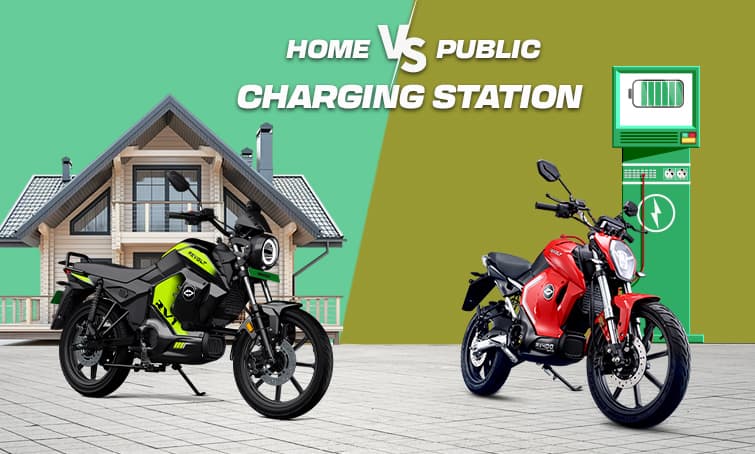
Home Charging vs Public Charging: What’s Right for You?
Charging at home remains the most cost-effective way to maintain your bike’s battery. Riders with bikes like the RV1+ can plug in overnight and wake up to a full battery, enjoying low-cost electricity rates.
Public charging stations are growing across cities and highways. While slightly costlier, these stations offer speed and convenience, especially for riders on long routes or during peak city hours. The cost difference between home charging and public stations highlights why knowing the bike battery charging price is important for daily planning.
Monthly Charging Expenses: A Realistic Look
To understand the real impact on a rider’s wallet, it’s helpful to break down monthly charging costs. These costs vary depending on usage patterns, battery size, and charging method, giving a clearer picture of daily expenses.
Daily Commuters
- Riders covering 25–30 km per day can expect a monthly charging cost of approximately ₹400–600. Bikes like the RV Blaze X, with moderate battery capacities, fit comfortably into this budget.
Typical monthly expenses include:
Daily home charging for regular commuting.
Occasional public charging for extended trips.
Usage patterns directly affect monthly bills.
Moderate Riders
For those riding occasionally or during weekends, monthly expenses usually fall around ₹200–400, depending on battery size and usage patterns.
High-Usage Riders
Delivery personnel or long-distance riders using high-capacity bikes like the RV400 may spend ₹800–1200 per month, factoring in multiple daily charges.
Quick tips to optimize costs:
Charge during non-peak electricity hours
Use smart charging features in electric bikes
Explore government-subsidized charging stations
Hidden Costs Beyond Charging
While charging forms the main expense, hidden costs can influence the overall electric bike budget. Understanding maintenance and replacement factors ensures riders are prepared for long-term costs beyond just electricity.
These additional costs can quietly add up over time, making it important to plan ahead and factor them into your monthly bike budget.
Battery Maintenance
Maintaining the battery health of an electric bike affects long-term expenses. Regular upkeep ensures the bike retains maximum efficiency, which in turn can slightly reduce the electric bike charging cost over time.
Replacement and Premium Services
While routine charging is affordable, battery replacement for models like the RV400 BRZ comes at a higher cost. Some premium public charging stations also offer app-based monitoring, priority slots, or faster charging for a small additional fee.
Factors That Make Bike Charging Affordable
Charging costs can be managed better with simple steps and smart practices. By leveraging technology and timing, riders can reduce their expenses without compromising convenience.
Tips to make charging more cost-effective:
Smart Home Chargers: Automate charging during low-tariff hours.
Portable Chargers: Useful for emergency top-ups, especially in city traffic.
Renewable Energy: Solar-powered setups reduce dependency on grid electricity.
Knowing these tips helps riders manage their budget while keeping electric bikes ready for daily use. The electric bike charging price becomes more predictable and manageable with planning.
The Future of Bike Charging in India
Looking ahead, several initiatives aim to make charging more affordable and accessible. The expanding infrastructure promises convenience and lower costs for electric bike owners in the years to come.
Here’s what the future holds for riders:
Government Initiatives
Several state governments are investing in more accessible charging stations, aiming to lower costs and reduce waiting times. Subsidized stations are expected to become more common in metro cities.
Also Read: Government Policies Supporting Electric 2 Wheelers
Technology and Innovation
With removable batteries, smart apps, and AI-driven charging management, bikes like the RV1+ and RV Blaze X are making charging faster and more cost-efficient. These technologies will likely reduce the bike battery charging price in India over the next few years.
The Real Picture
The bike battery charging price in India remains affordable and manageable for most riders, whether you own a compact RV1 or a high-capacity RV400 BRZ. By understanding factors like battery size, electricity rates, and charging methods, riders can plan their monthly budgets efficiently. Smart charging habits and awareness of public infrastructure will make riding electric bikes even more convenient in the years to come.
Also Read
How Many Trees Can You Save by Switching to an Electric Bike
6 Electric Bike Accessories That Add Value to Your Electric Bike