

Delhi EV Policy 2.0: Road Tax Waiver, Subsidy & the 2028 Petrol Ban Explained
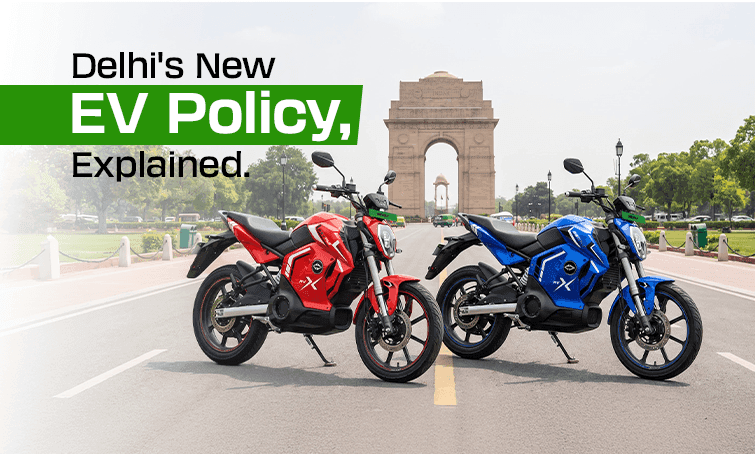
If you're planning to buy an electric bike in Delhi, timing matters right now more than usual. Delhi EV Policy 2.0 took effect on 1st July 2026, replacing the earlier policy, and it changes both the subsidy math and the long-term road-legal picture for petrol two-wheelers in the capital. Here's what's actually confirmed, sourced against government and industry reporting current as of August 2026.
Why Delhi Keeps Revising Its EV Policy
Delhi has some of the worst air quality of any capital city in the world, and two-wheelers make up nearly 67% of the city's total vehicle population. Given that scale, the Delhi government treats two-wheeler electrification as one of its highest-leverage pollution levers, which is why the policy gets revised more aggressively and more frequently than most other states' EV policies.
The New Subsidy Numbers Under Policy 2.0
This is the part most likely to be quoted incorrectly elsewhere, so here are the current figures directly:
Purchase subsidy: ₹10,000 per kWh of battery capacity, capped at ₹30,000 in Year 1 of the policy
The subsidy tapers in later years: ₹20,000 in Year 2, ₹10,000 in Year 3
Eligibility cap: ₹2.25 lakh ex-showroom price — higher than the earlier policy's threshold
A separate ₹10,000 scrappage bonus is available if you scrap a Delhi-registered BS-IV or older two-wheeler and buy a new EV within 6 months of receiving your Certificate of Deposit
For a bike with a 3.24 kWh battery, the math works out to 3.24 × ₹10,000 = ₹32,400 on paper, but the actual subsidy is capped at ₹30,000, since that's the lower limit.
Combine State and Central Subsidies
Delhi's state subsidy stacks on top of the central PM E-DRIVE scheme, which currently offers ₹2,500 per kWh capped at ₹5,000 per vehicle for electric two-wheelers, though that central scheme's own two-wheeler window is scheduled to close on 31 March 2028 and is fund-limited — meaning it could close earlier if allocated funds run out, or later if extended. One important distinction worth knowing: PM E-DRIVE's eligibility ceiling is ₹1.5 lakh ex-factory price, which is lower than Delhi's own ₹2.25 lakh ex-showroom cap. If a bike is priced between those two thresholds, it may qualify for Delhi's state subsidy but miss out on the central one entirely. We've covered the central subsidy scheme in full detail separately.
Road Tax and Registration Benefits
Beyond the direct purchase subsidy, Delhi EV Policy 2.0 continues to offer full exemption on road tax and registration fees for electric vehicles — a benefit that applies regardless of the battery-capacity-based subsidy calculation above, and one that's easy to overlook when comparing the headline subsidy numbers between states.
The 2028 Petrol Two-Wheeler Registration Ban — What It Actually Means
This is the detail that gets sensationalized the most, so it's worth being precise: from 1st April 2028, Delhi will only register new electric two-wheelers. This is not a ban on riding your existing petrol bike — it's a ban on registering *new* petrol two-wheelers in the city from that date forward. If you already own and have registered a petrol bike before that date, it remains legal to own and ride, subject to Delhi's existing separate vehicle-age rules that already apply to older petrol vehicles independent of this policy.
Similarly, from 1st January 2027, only electric three-wheelers and N1-category trucks will be newly registered in Delhi.
The practical implication: if you're planning to buy *any* two-wheeler in Delhi for long-term use, the window for buying a new petrol bike is closing faster than many buyers realize, and switching to electric now avoids having to make this decision under time pressure closer to 2028.
How Delhi Compares to Neighbouring States
For readers considering registration in a neighbouring NCR state instead of Delhi specifically, it's worth knowing that subsidy structures differ meaningfully across state lines even within the same metro region. Haryana and Uttar Pradesh, both part of the broader NCR, run entirely separate EV policies with their own rates and eligibility rules, and in UP's case, the EV road tax waiver has reportedly already expired. This means the state you register in, not just where you live or buy, can meaningfully change your effective savings, and this is worth confirming before assuming Delhi-specific figures apply if you're commuting across state lines regularly.
The Air Quality Context Behind the Push
Delhi's aggressive EV policy revisions aren't happening in isolation, they're a direct response to the city's consistently severe air quality readings, among the worst of any capital city globally. Two-wheelers specifically account for close to two-thirds of the city's total vehicle population, making them a uniquely high-leverage target for emissions reduction compared to cars or buses. Understanding this context helps explain why Delhi's policy timeline feels more aggressive and more frequently revised than most other Indian states, the government is treating two-wheeler electrification as one of its most direct available levers against the city's pollution crisis, and policy revisions are likely to continue at a similar pace going forward.
What This Means If You're Buying Soon
Given the subsidy is structured to reward Year 1 buyers with the highest amount (₹30,000 vs. ₹20,000 in Year 2), and given the scheme took effect 1st July 2026, buying sooner within this first-year window genuinely matters financially, not just as a general "sooner is better" sentiment.
Before finalizing a purchase, verify these three things directly with your dealership or Delhi's transport department:
1. Whether the ₹30,000 Year 1 subsidy is being actively disbursed yet, since new policies sometimes have a gap between legal effect and operational rollout
2. Whether the specific model you're considering falls under both the Delhi ₹2.25 lakh cap and the central PM E-DRIVE ₹1.5 lakh cap, if you want both subsidies
3. Current PM E-DRIVE status, since that scheme's own deadline is close and its future beyond July 31, 2026 was not fully confirmed as of this writing
Where the Revolt RVX Fits
The Revolt RVX is priced at ₹1,24,990 ex-showroom, comfortably within both Delhi's ₹2.25 lakh cap and the central scheme's ₹1.5 lakh ex-factory threshold, making it well-positioned to qualify for both layers of subsidy discussed here, subject to current availability confirmation. We've also written a dedicated breakdown of RVX-specific subsidy savings if you want the full numbers worked out for this specific model.
Book a test ride to see the RVX in person before the current subsidy window potentially shifts.
Conditions apply. Figures marked with an asterisk are claimed/rated values based on internal testing under standard conditions. Actual performance may vary depending on riding conditions, road and terrain, load, tyre pressure, rider weight, and riding style.