

PM Modi Wants India to Save Fuel: And an EV Might Be the Smartest Way to Start
Something unusual happened in India this month. PM Modi stood up in Hyderabad and personally asked every Indian citizen to save fuel. Not the government. Not corporations. You and me. He called it an act of "patriotism."
That is not something you hear from a Prime Minister every day.
Why Is This Happening?
India imports nearly 85% of its fuel — and about half of it comes through the Strait of Hormuz, a shipping route that has been disrupted by the conflict in West Asia since early 2026.
The result? Petrol prices just went up ₹3 per litre overnight. In Delhi, petrol crossed ₹97 per litre. More hikes could follow.
India spent $174.9 billion on oil imports in FY2026 — that is 22% of everything we import as a country. Every time global oil prices rise, that number goes up, and the rupee feels the pressure.
Modi is asking Indians to reduce this dependence. And for two-wheeler commuters, there is one response that is practical, immediate, and actually puts money back in your pocket.
The Most Actionable Thing You Can Do: Go Electric
Most fuel-saving advice is vague. "Use public transport." "Carpool." Great in theory — hard in real life when you have a commute, a schedule, and a family to manage.
Switching to an electric bike is different. It is one decision that saves fuel every single day, automatically, for years.
Here is what that looks like in real numbers.
Your Petrol Bill vs Your Electricity Bill
Say you ride 30 km a day on a petrol bike, 26 days a month.
| Petrol Bike (110cc) |
Revolt RV1+ | |
| Cost per km |
₹1.65 |
₹0.22 |
| Monthly fuel/electricity |
₹1,287 |
₹172 |
| Annual fuel/electricity |
₹15,444 |
₹2,064 |
| Annual maintenance |
₹5,000 |
₹1,500 |
| Total annual running cost |
₹20,444 |
₹3,564 |
You save over ₹16,000 every year. That is not a projection — that is today's numbers.
And every petrol price hike that follows makes this gap wider. If petrol hits ₹110, your annual saving crosses ₹20,000. At ₹120, it is over ₹25,000.
Here Is the Part Most People Do Not Think About
When you fill up at a petrol pump, that money — at least a big part of it — leaves India. We import 85–90% of our crude oil. Your fuel spend contributes to the exact foreign exchange drain Modi is worried about.
When you charge a Revolt electric bike, the electricity comes from the Indian grid. Coal, hydro, solar, wind — all produced here. Not a single rupee leaves the country.
Riding electric is not just good for your wallet. It is exactly the kind of fuel conservation the PM is asking for.
The Government Is Backing This Right Now
India's PM E-DRIVE Scheme has ₹10,000 crore set aside to support EV adoption — including direct subsidies on electric two-wheelers at the point of purchase.
States like Delhi, Maharashtra, Gujarat, and Rajasthan offer additional road tax waivers and registration rebates. Combined, the central and state subsidies can bring down the price of an electric bike by ₹20,000 to ₹25,000.
This level of support will not last forever. As EV adoption grows, subsidies will reduce. Right now is the best time to buy.
Why an Electric Bike Is the Easiest Switch
An electric car costs ₹10–15 lakh. It needs a charging setup, parking, and a big decision.
A Revolt electric bike? Much simpler.
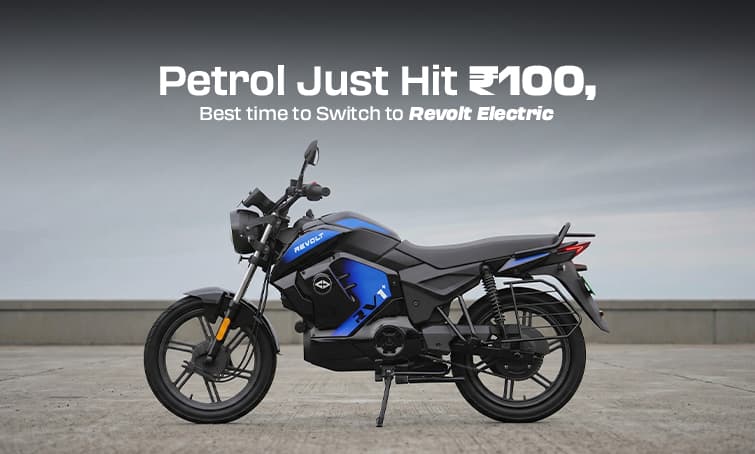
Revolt RV1+: Starts at ₹1,04,990* & of 160 km per charge
Revolt RV BlazeX: Starts at ₹1,19,990* & of 150 km per charge
All of them have a removable battery you charge from any regular 3-pin socket at home. No special installation. No charging point needed. Just plug in before you sleep, ride in the morning.
For anyone who commutes daily on a two-wheeler, this is the lowest-effort, highest-reward switch available.
The Bottom Line
Modi asked India to save fuel. The country is responding — governments, corporations, institutions are all taking steps.
For two-wheeler riders, the answer is simple: go electric.
It saves you ₹16,000+ a year. It reduces India's oil import bill. It works with your current routine. And right now, the government is paying part of the price through subsidies.
It is not a sacrifice. It is just a smarter choice.
Book a free test ride at your nearest Revolt Hub and see the difference for yourself.